

















CAN YOU SHARE WITH US THE MOMENT YOU REALIZED YOU WANTED TO PURSUE ART AS A CAREER?
I have always felt that art was the language through which I understood the world. Even as a child, the simple act of holding a pencil opened a doorway into imagination and expression that felt instinctive and natural. As I grew older, that impulse deepened into a conviction. I worked tirelessly, learning to balance ambition with humility, and I followed this path with a grounded sense of purpose, fully aware that choosing art meant choosing a lifelong commitment rather than a passing interest.
WHAT ROLE DID YOUR UPBRINGING IN BARCELONA PLAY IN SHAPING YOUR ARTISTIC VISION AND PASSION FOR HORSES?
Although I live in Barcelona now, my roots are in the Basque Country, a place where animals and nature coexist with quiet dignity. Growing up in that environment taught me to observe the subtleties of movement, atmosphere, and instinct. Later, in Barcelona, my partner opened the door to the equine world, and I found in horses a subject that resonated deeply with my memories, emotions, and artistic identity. The city gave me structure and culture. The Basque Country gave me feeling and intuition. Together, they shaped the direction my art would eventually take.
HOW DO YOU INCORPORATE YOUR LOVE FOR HORSES INTO YOUR ARTWORK? CAN YOU DESCRIBE YOUR ARTISTIC PROCESS WHEN DEPICTING THESE BEAUTIFUL ANIMALS?
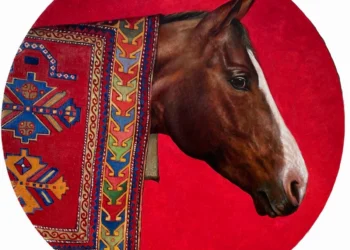
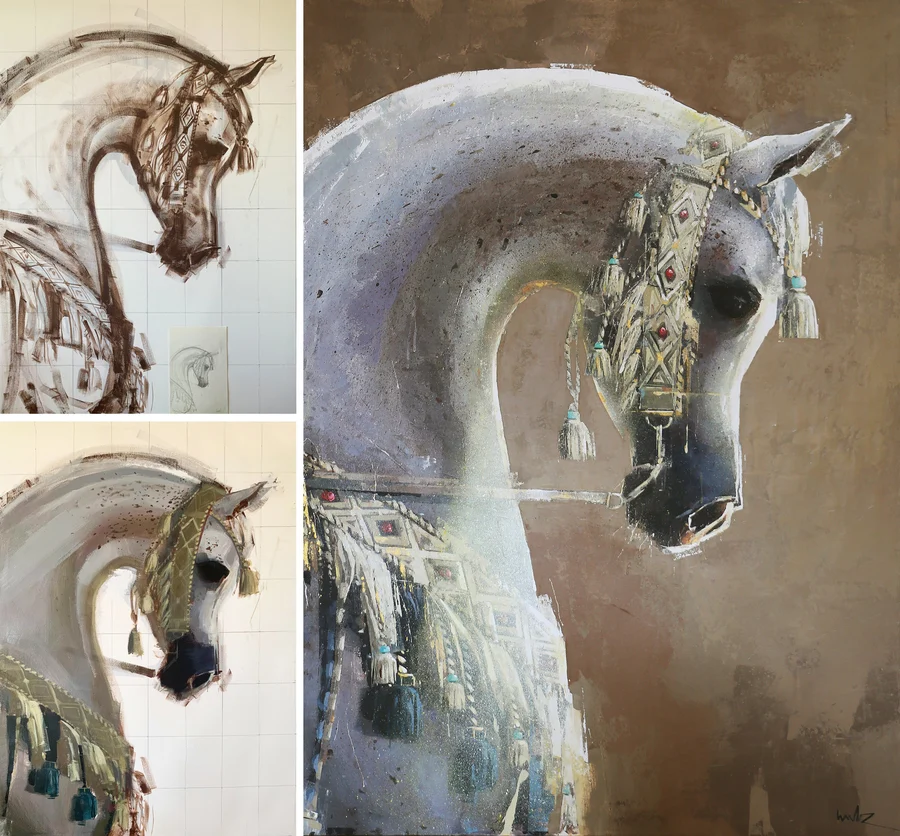
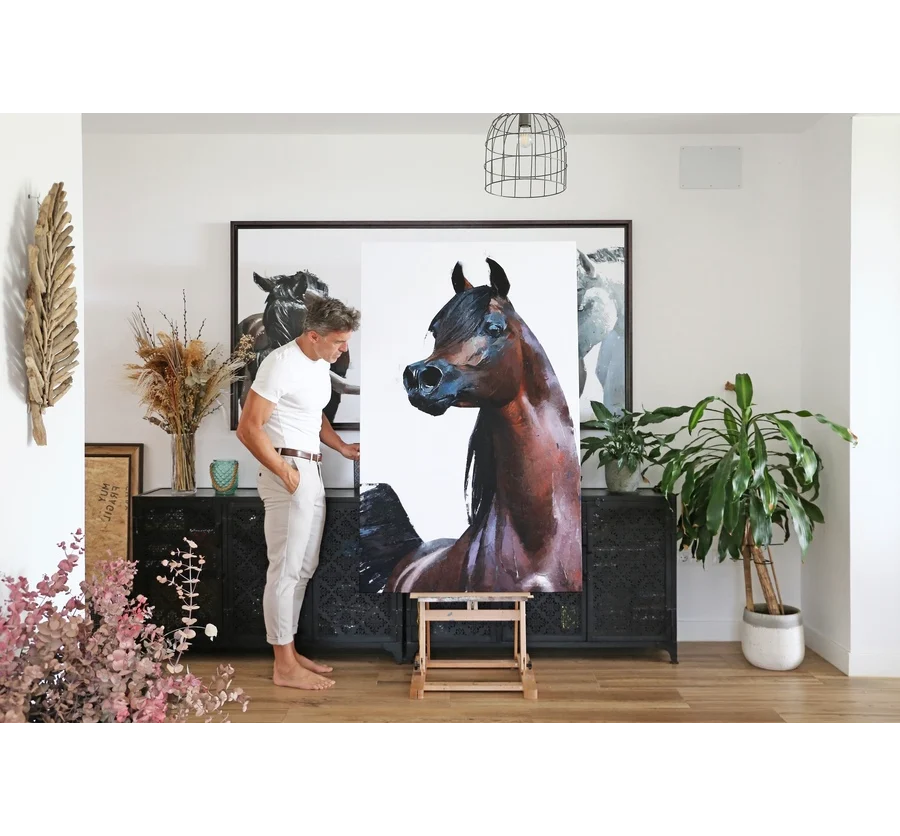
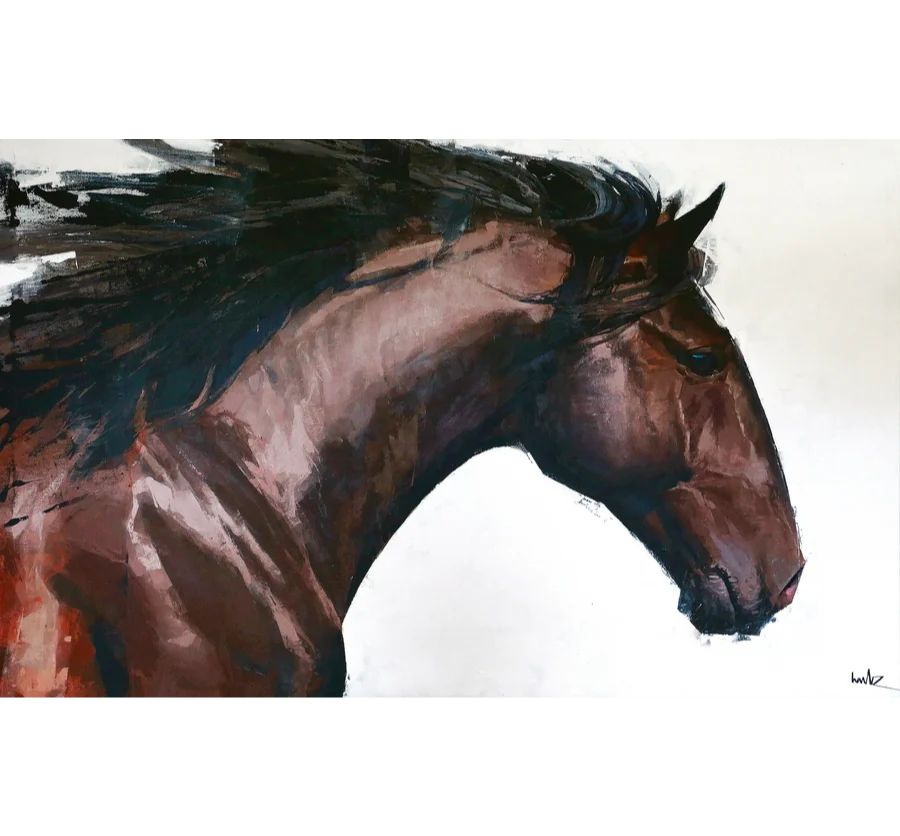
Painting horses is an intimate ritual for me. Because I live with them and care for them, I understand their personalities, their moods, their vulnerabilities. Before I begin a painting, I spend time with them in silence, watching the way they breathe, the cadence of their steps, the softness in their eyes. I try to absorb their energy, and when I finally face the canvas, I paint from that emotional memory rather than a literal observation. This helps me translate something far more profound than anatomy. It allows me to communicate their soul.
COULD YOU TELL US ABOUT YOUR JOURNEY IN THE ART WORLD? WHAT CHALLENGES DID YOU FACE AS YOU BEGAN YOUR CAREER?
My journey has been a mix of passion and persistence. Nothing came easily. I faced the uncertainty that every emerging artist experiences, the constant need to prove myself, and the discipline required to keep practicing even when no one is watching. But I believed in the seeds I planted. Over time, they grew into opportunities: international painting awards, invitations to exhibitions, workshops around the world, and interviews like this one. Each step has reminded me that dedication has its own quiet reward.
AS A PROFESSOR OF ART, HOW DO YOU APPROACH TEACHING YOUR STUDENTS? WHAT KEY LESSONS DO YOU EMPHASIZE IN THEIR ARTISTIC DEVELOPMENT?
For me, teaching is an exchange. I always tell my students that while they will learn many techniques from me, I hope to learn just as much from them. I try to cultivate an atmosphere where creativity feels natural and experimentation feels safe. I encourage patience, perseverance, and joy, because those qualities shape an artist as much as skill does. And when former students return years later to share their progress, it is one of the greatest affirmations of my work as an educator.
IN YOUR OPINION, WHAT IS THE MOST IMPORTANT QUALITY YOU NEED TO HAVE AS AN ARTIST?
Observation is essential. Creativity grows from the ability to see the world with curiosity, to notice small gestures or fleeting expressions that others overlook. If you combine that with a willingness to work hard, challenge yourself, and trust your instincts, you begin to form an artistic identity that feels authentic. When talent and effort meet, the result can be something truly special.
AS SOMEONE WHO HAS DEDICATED COUNTLESS HOURS TO OBSERVING AND UNDERSTANDING THE GRACE OF HORSES, HOW DO YOU TRANSLATE THEIR SPIRIT, MOVEMENT, AND EMOTIONAL DEPTH ONTO THE CANVAS IN A WAY THAT INVITES VIEWERS TO FEEL AN INTIMATE CONNECTION WITH YOUR SUBJECTS?
It comes from a blend of sensitivity and intuition. I observe, I feel, and then I interpret. Horses communicate through subtle language. Their spirits are strong yet gentle, and my goal is always to translate that duality. I paint from the heart, allowing emotion to guide my technique, so that viewers can feel the same warmth and vitality that I experience in their presence.
YOUR WORK BRIDGES TRADITIONAL TECHNIQUES WITH CONTEMPORARY EXPRESSION. HOW DO YOU NAVIGATE THIS BALANCE, AND IN WHAT WAYS DO THESE TWO ARTISTIC WORLDS INFORM AND ENRICH ONE ANOTHER IN YOUR CREATIVE PRACTICE?
My foundation lies in drawing and illustration, where discipline and precision are essential. Over the years, I experimented with various mediums until acrylic paired with a palette knife felt like a natural extension of my hand. This technique allows for expressive textures and modern dynamism while still respecting classical structure. The interplay between tradition and innovation creates a harmony that feels true to my artistic evolution.
MAREEE 25 BROUGHT TOGETHER DIVERSE VOICES FROM AROUND THE WORLD. HOW DID THIS EXPERIENCE INFLUENCE YOUR PERSPECTIVES ON CULTURAL EXCHANGE THROUGH ART, AND WHAT DID YOU TAKE AWAY FROM SHOWCASING YOUR WORK IN BAHRAIN’S VIBRANT CREATIVE LANDSCAPE?
Mareee 25 was a reminder that art is a universal meeting point. The diversity of perspectives encouraged me to think more openly about how cultural heritage, personal stories, and shared values can merge through creative expression. Bahrain offered a landscape full of energy and warmth, and I felt that the exchange between artists could grow into something meaningful over time. Experiences like this broaden our artistic horizons.
MANY OF YOUR PAINTINGS EVOKE A SENSE OF STORYTELLING, ALMOST AS IF EACH BRUSHSTROKE CARRIES ITS OWN QUIET NARRATIVE. HOW CONSCIOUSLY DO YOU WEAVE EMOTION, MEMORY, OR SYMBOLISM INTO YOUR COMPOSITIONS, AND WHAT DO YOU HOPE YOUR AUDIENCE DISCOVERS WITHIN THESE LAYERS?
Each texture and stroke contains intention. Sometimes the narrative is personal, drawn from a memory or a feeling I want to preserve. Other times, it emerges naturally as the painting unfolds. I want viewers to move closer, to study the details, and to sense the emotions layered beneath the surface. My hope is that each person discovers something different, something that resonates with their own experiences.
WITH YOUR DUAL ROLE AS AN ARTIST AND EDUCATOR, HOW DO YOU MAINTAIN YOUR OWN CREATIVE MOMENTUM WHILE NURTURING THE ARTISTIC GROWTH OF YOUR STUDENTS? DO THE IDEAS AND ENERGY YOU ENCOUNTER IN THE CLASSROOM SHAPE YOUR PERSONAL WORK IN UNEXPECTED WAYS?
Creativity is a continuous cycle. Teaching energizes me because it requires problem solving, empathy, and imagination. The questions my students ask, the challenges they face, and the breakthroughs they experience all feed my own artistic curiosity. Their enthusiasm keeps my mind active, and that inevitably influences my work. In both roles, I am always learning, always creating, always exploring.