

















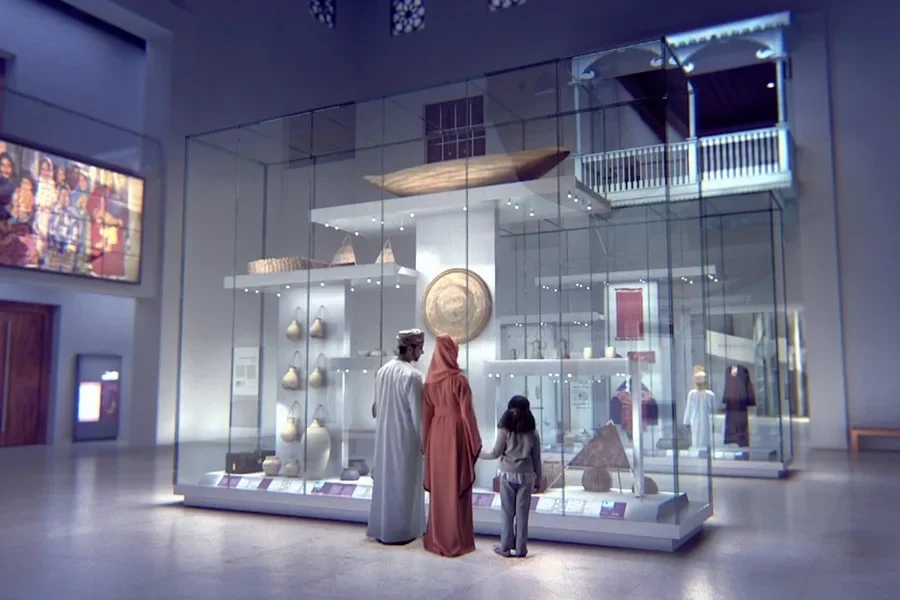
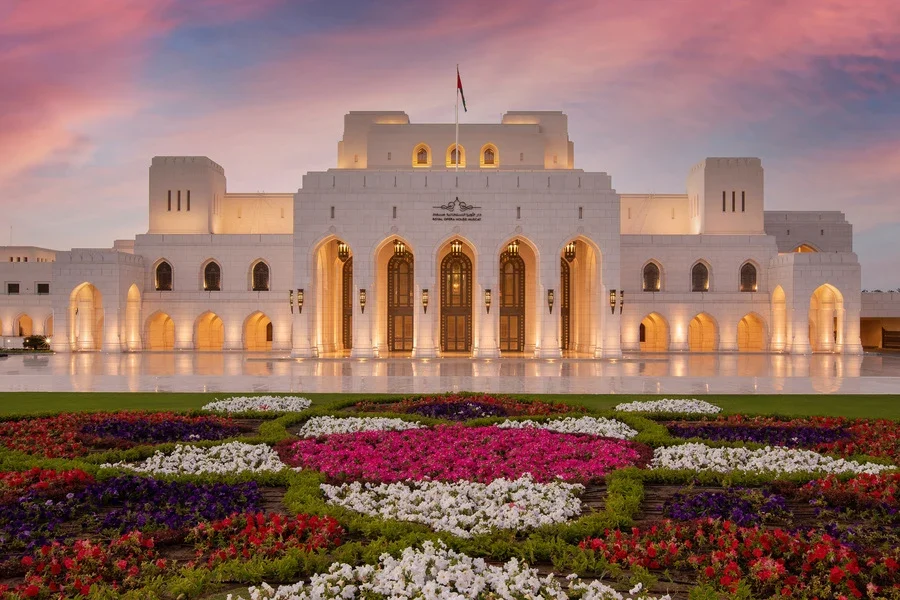
A visit to the National Museum of Oman offers a balanced introduction to the country’s story. The museum’s contemporary design and thoughtful displays showcase maritime achievements, ancient trade, traditional crafts, and the evolution of the Omani identity. Each exhibit reflects a nation that has carried its past into the present with care. Close by, the Royal Opera House Muscat stands as a symbol of the country’s cultural vision. Its architecture and programming blend global artistry with local refinement, creating a space where visitors can enjoy world-class performances while observing the Sultanate’s growing cultural confidence.
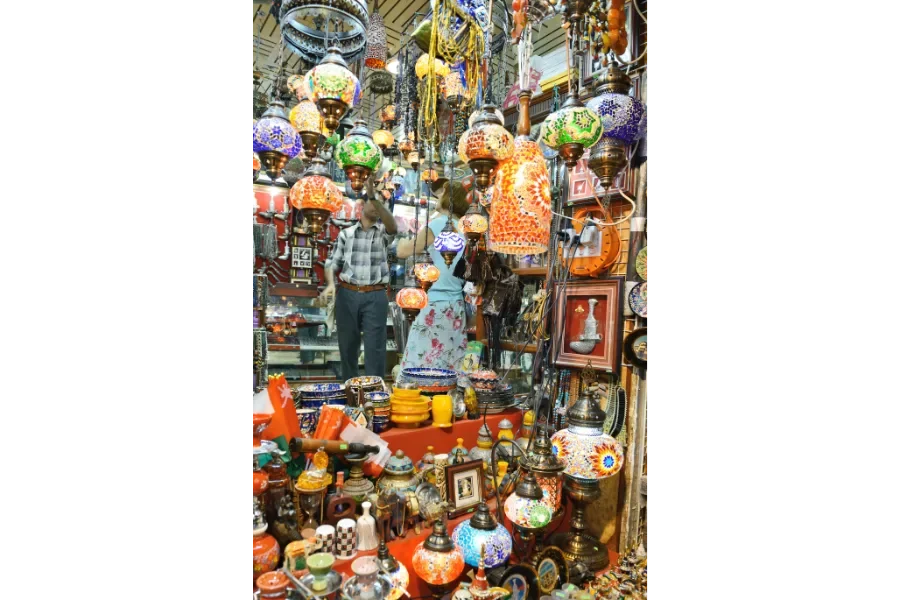
To experience daily life, the Muttrah Souq provides a lively contrast. Its narrow passages are filled with the scents of spices and frankincense, and the market’s mix of textiles, silver jewellery, and handmade crafts reveals a city that remains rooted in tradition. The warmth of vendors and the rhythm of bargaining add to the authenticity, making it a memorable stop for anyone wishing to engage with Muscat’s heritage.
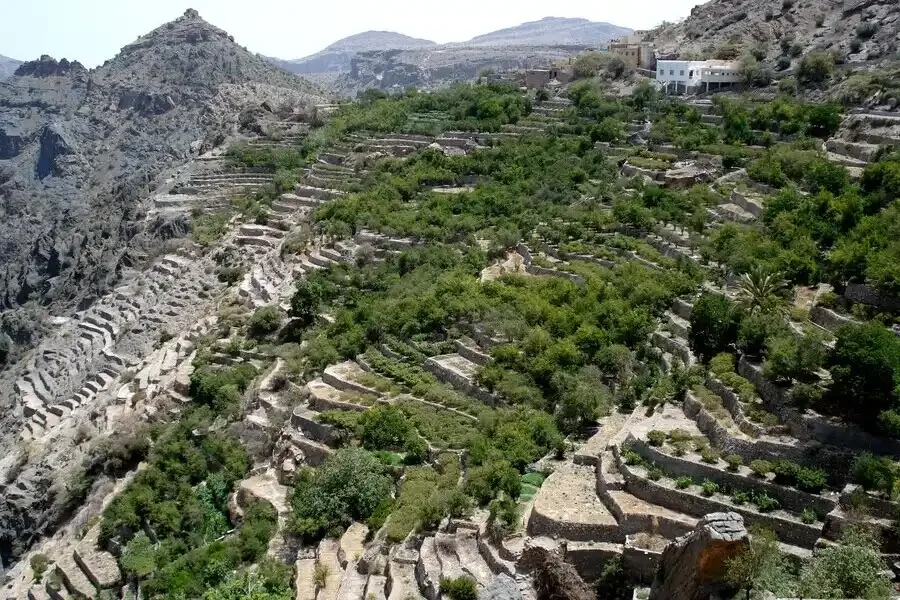
Leaving the coast, the landscape transforms as the road climbs toward Jebel Akhdar. The temperature cools, the cliffs grow steeper, and the mountain reveals a world shaped by both nature and human ingenuity. Terraced farms built along the slopes support pomegranates, roses, and other crops that thrive in the high-altitude climate. The scenery is dramatic, marked by deep wadis and sweeping views that define the region’s reputation as one of Oman’s most striking natural settings.
In recent years, the mountain has become home to refined resorts that prioritize privacy, wellness, and panoramic views. DusitD2 Naseem Resort offers a calm retreat inspired by natural surroundings, while Indigo Hotel Jebel Akhdar brings a more design-focused atmosphere to the highlands. Both properties provide comfort without detracting from the rugged beauty around them. From private terraces and cliffside pools, guests can observe the valleys below in complete stillness.
The villages scattered across the slopes present a connection to the country’s agricultural traditions. Birkat Al Mouz is known for its date palms and the ancient Falaj Al Khatmein, a UNESCO-listed irrigation channel that has supplied water for generations. Nearby, Bayt Ar Ridaydah reflects the fortified architecture that once defined rural leadership. Further along the mountains, small settlements such as Al Ayn, Al Aqur, and Al Sharyjah showcase stone homes built directly into the rock. In the quiet setting of Sowagra Village, the link between people and land becomes clear, shaped by respect for the terrain and an understanding of how to thrive within it.
Continuing inland, Nizwa emerges as one of Oman’s most historic cities. Dominated by its impressive 16th-century fort, the city offers a glimpse into centuries of political and cultural significance. Exploring the fort reveals stories of historic defenses, daily life, and the leadership that once guided the region. Nearby, the traditional Nizwa Souq remains a focal point for local trade. Its pottery, frankincense, Khanjars, and produce reflect a community that has preserved its craftsmanship while adapting to modern visitors.
Oman is a country where heritage, landscape, and hospitality come together with a sense of continuity. From Muscat’s cultural experiences to the high vistas of Jebel Akhdar and the legacy of Nizwa, the Sultanate offers a journey shaped by authenticity. It is a place that invites travellers to explore its beauty at a measured pace, leaving with a deeper appreciation for a nation that values both its past and its future.