

















HUBLOT’S PHILOSOPHY IS THE ART OF FUSION. HOW DO YOU TRANSLATE THIS DNA INTO A STRATEGY THAT RESONATES ACROSS THE MEAI REGION, ESPECIALLY IN TERMS OF SPECIAL EDITIONS, PARTNERSHIPS, AND CULTURAL RELEVANCE?
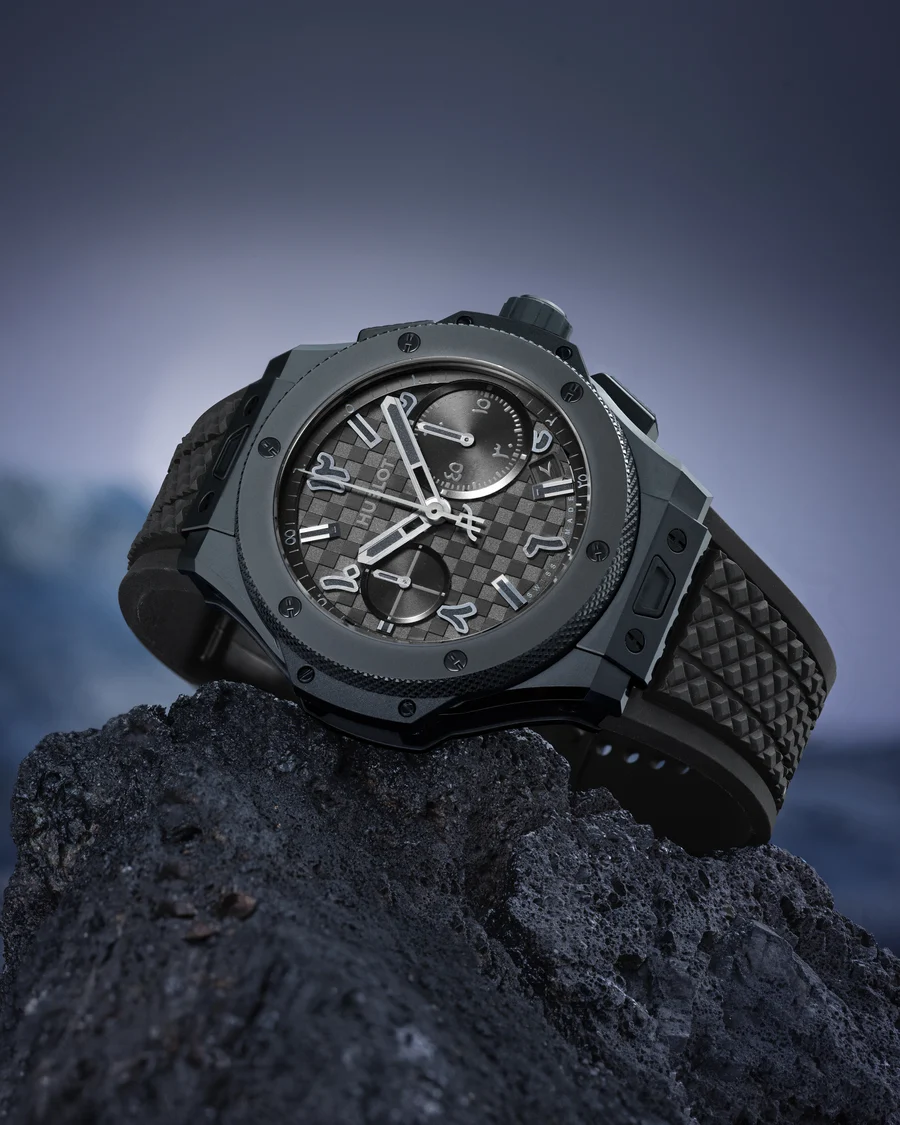
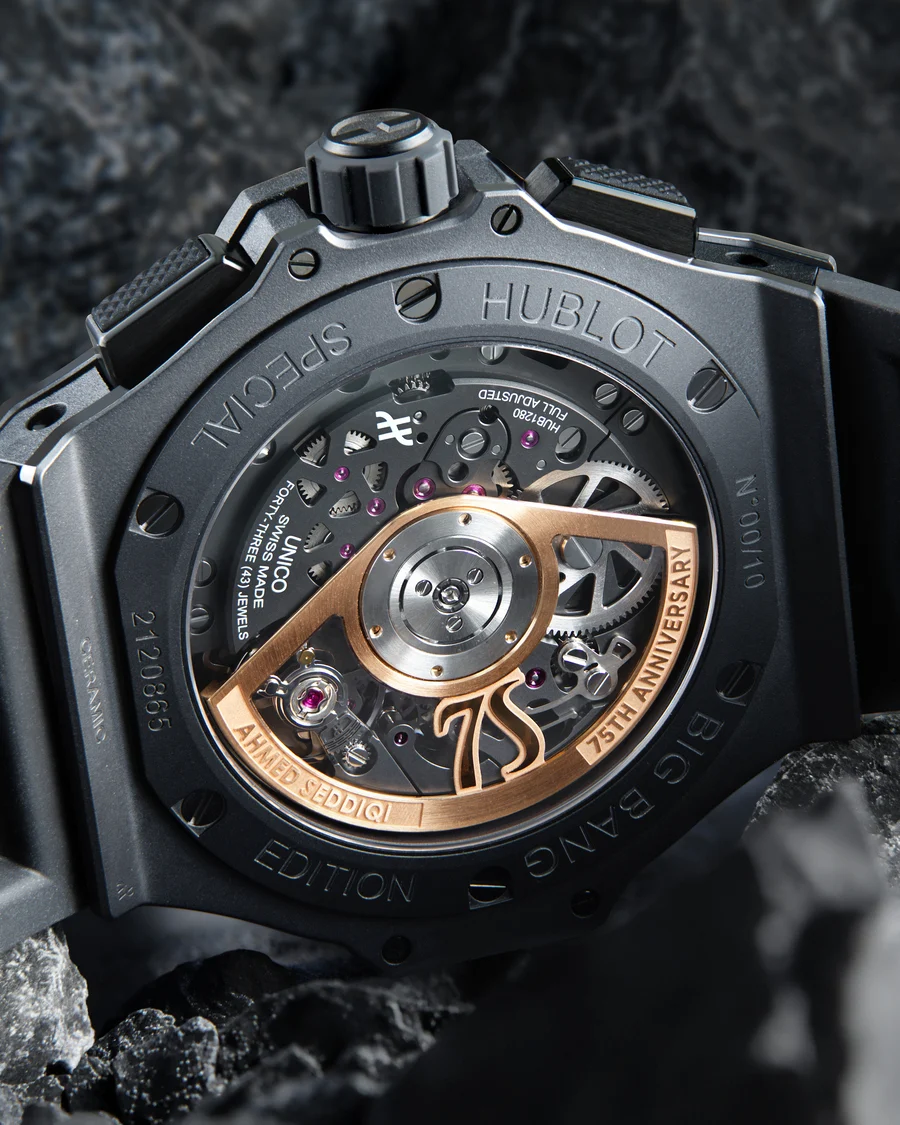
Hublot has always embodied the Art of Fusion in watchmaking. This has been our philosophy since Mr. Biver took over the brand in 2004, and one of the things he understood early was the importance of developing local editions for local markets. It’s something we’ve done consistently for many years. Most recently, during Dubai Watch Week, we launched special editions in partnership with Seddiqi to mark both the 20th anniversary of the Big Bang and Seddiqi’s 75th anniversary. These editions sold out almost immediately. Collectors in the Middle East appreciate watches created specifically for them, and these projects strengthen the bond between Hublot and the community. Their success is the best proof that we must continue developing limited regional editions.
YOU’VE MENTIONED BEFORE THAT THE MIDDLE EAST IS HIGHLY SATURATED WITH LUXURY BRANDS. HOW DOES HUBLOT MAINTAIN ITS COMPETITIVE EDGE AND FOSTER THE HUBLOTISTA COMMUNITY AMID SUCH INTENSE COMPETITION?
Hublot is very well established in the Middle East and Africa. We’ve spent years building a solid foundation, and today our distribution strategy is one of our strengths. Across the Middle East, Africa, and India, we operate 20 boutiques, which gives us strong control of brand equity and allows us to engage closely with clients. At the same time, we believe in maintaining a selective multi-brand network. It helps us reach a wider audience and remain accessible while still protecting the brand’s positioning. This region also has unique characteristics. For example, our client base here is almost evenly split between men and women: 51% men and 49% women. Globally, that ratio is closer to 70–30. The Middle East stands out as a leading market not only in volume, but also in diversity and sophistication.
YOU ARE EXPANDING PHYSICAL RETAIL IN MARKETS LIKE INDIA AND SAUDI ARABIA WHILE ALSO EMPHASIZING DIGITALIZATION. HOW DO YOU BALANCE THE IMPORTANCE OF THE LUXURY IN- STORE EXPERIENCE WITH THE RISE OF E-COMMERCE?
There has been a fundamental shift in consumer behavior since COVID. Before the pandemic, most brands were focused on retail and wholesale. During lockdowns, everyone had to adapt quickly, and e-commerce became essential. However, in luxury watchmaking, the online share remains very small for us. Young generations do purchase more online, but most clients in this category still want a full boutique experience. They want to speak to the team, understand the watch, and feel it on their wrist. That’s something digital cannot replicate unless you already know exactly what you want. E-commerce remains important and we will continue developing it, but the in-store experience will always be at the heart of luxury watchmaking.
WITH YOUR ENGINEERING AND WATCHMAKING BACKGROUND, HOW DOES YOUR TECHNICAL EXPERTISE INFLUENCE YOUR COMMERCIAL STRATEGY AS MANAGING DIRECTOR?
It’s incredibly valuable to have a deep understanding of what we manufacture. Hublot became a true manufacture in 2010, yet we never heavily promoted that aspect because the brand was often seen as provocative, innovative, and marketing driven. But the truth is that our watchmaking savoir-faire is exceptional. Our first in-house movement, the Unico chronograph, marked a major milestone. Since then, we have developed all our complications internally and created pieces that had never existed in the industry, such as LaFerrari in 2014 and the Key of Time. Understanding these capabilities helps me communicate our values more effectively and highlight the craftsmanship behind the brand. Our CEO, Julien Tornare, shares this focus. Since joining, he has made it a priority to reinforce awareness of our watchmaking expertise.
HUBLOT IS KNOWN FOR ITS MASTERY OF MATERIALS, INCLUDING PROPRIETARY CERAMICS AND SAPPHIRE. IN A REGION WHERE CLIENTS ARE HIGHLY KNOWLEDGEABLE, HOW DO YOU EMPHASIZE YOUR R&D AND MATERIAL INNOVATION?
Clients in the Middle East are true experts. They understand materials, complications, and craftsmanship, which makes discussions here incredibly enriching. Recently, I hosted three members of a regional watch club at the manufacture. They were surprised by the depth of our watchmaking capabilities, from production to complications, and by the scale of our investment in R&D. We develop materials that don’t exist anywhere else. Magic Gold is the best example: an unscratchable gold alloy introduced in 2011. For thousands of years, there had been no evolution in gold alloys until that moment. This spirit of innovation is one of Hublot’s greatest strengths.
HUBLOT PARTICIPATES ACTIVELY IN REGIONAL EVENTS SUCH AS DUBAI WATCH WEEK, THE DOHA JEWELRY AND WATCHES EXHIBITION, AND JEWELLERY ARABIA. HOW DO YOU VIEW DUBAI WATCH WEEK AS A PLATFORM FOR ENGAGING WITH COLLECTORS AND THE INDUSTRY?
Dubai Watch Week is a unique platform because it’s not a commercial event. Unlike Watches and Wonders, Baselworld, SIHH, or even Jewellery Arabia and Doha, Dubai Watch Week is not about selling. It’s about sharing values, knowledge, and experiences. The Seddiqi family identified a gap in the industry and created an event centered around education and passion. It attracts collectors not only from the region but from around the world, and the international media coverage is remarkable. For us, Dubai Watch Week is an opportunity to connect directly with the community in a meaningful way. It’s now one of the most important events on the global watch calendar.
LOOKING AHEAD, WHAT IS YOUR VISION FOR HUBLOT IN THE MIDDLE EAST, AFRICA, AND INDIA BY 2030? WHAT MILESTONES WILL DEFINE SUCCESS?
This region will undergo major developments by 2030, especially in Saudi Arabia, where national transformation is accelerating. We already operate five boutiques there, including our newly inaugurated flagship in Solitaire Mall, opened in October with our CEO and our partners Attar United. Two more boutiques are already in the pipeline. Saudi Arabia still has huge growth potential. The rest of the region is more mature, so the focus there is on increasing market share and achieving steady organic growth. India is another major opportunity. I took over the market earlier this year, and I see significant potential. The brand already enjoys strong equity there, but with the right investment and focus, Hublot can become one of the top brands in the country. That is the ambition for the coming years.