

















WHAT FIRST DREW YOU TO PHOTOGRAPHY AND FILMMAKING, AND HOW DID YOUR EARLY EXPERIENCES SHAPE YOUR CAREER?
I still remember it as if it were yesterday, my grandmother took me to an outdoor cinema in the 1940s. It was the first time I had ever seen moving pictures. We sat under the stars, and suddenly these people appeared on a white screen, alive and speaking, yet made entirely of light. To a young boy, it was magic, pure magic. That night stayed with me. I couldn’t stop thinking about how it was possible, how something so far away could come to life before our eyes. From that moment, I became fascinated by the idea of capturing life, whether through a still image or on film. I wanted to understand the mystery behind it. That curiosity became the beginning of everything for me, a lifelong journey into photography and cinematography, driven by the same sense of wonder I felt that night.
WHAT FORMATIVE PROJECT OR ASSIGNMENT EARLY IN YOUR CAREER MADE YOU REALIZE THIS WAS YOUR LIFE’S WORK?
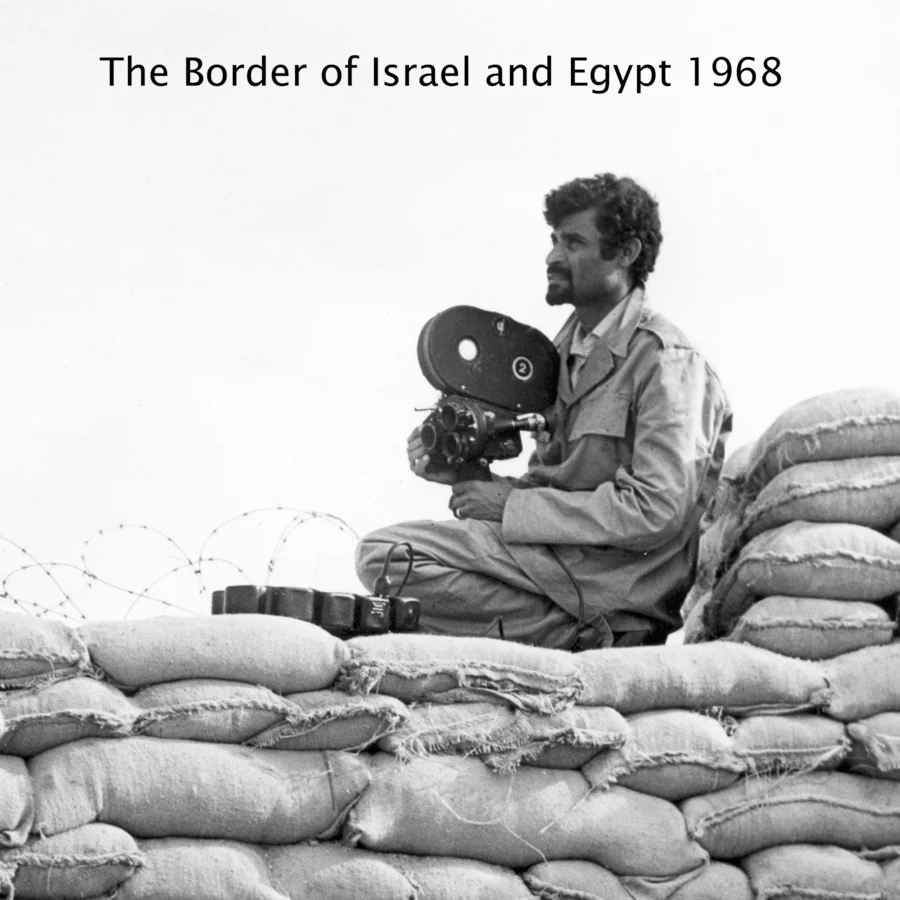
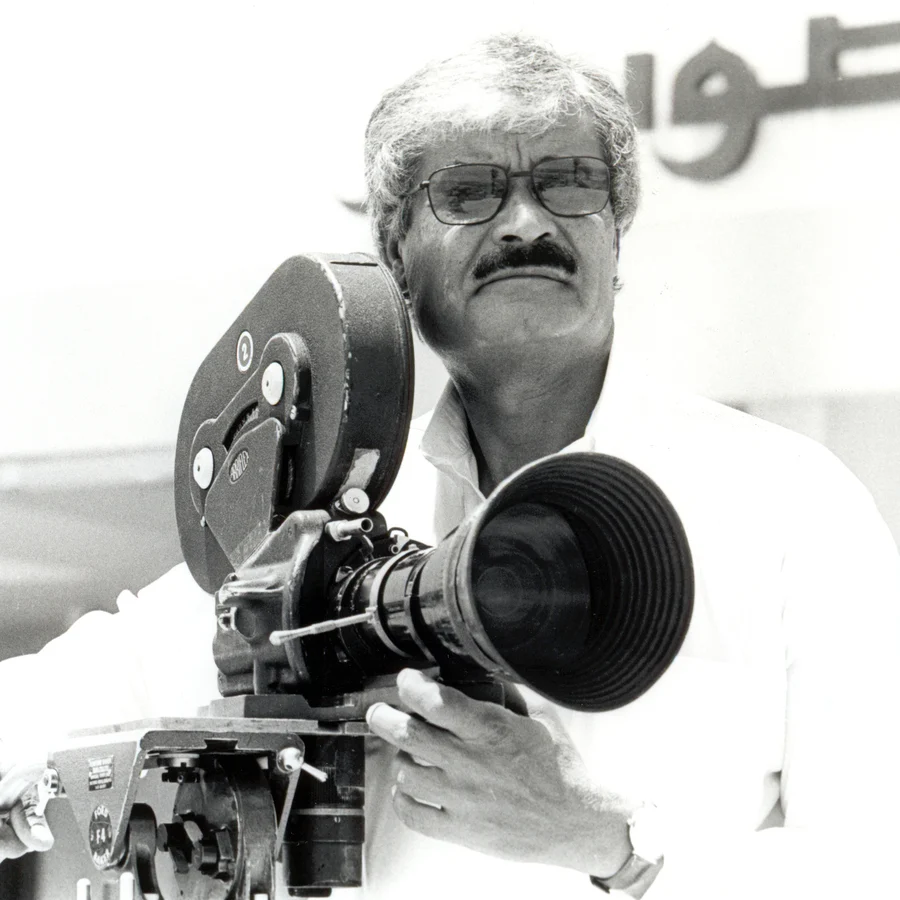
In the early days, opportunities were few, and the equipment was rare. But I remember one assignment for the BAPCO film unit, I was asked to film a cultural event. It may sound simple, but to me it was monumental. I held a camera that could truly record life, not just observe it. When I saw the footage projected later, people I knew, their expressions, their movements, I felt something stir inside me. I realised that film wasn’t just a tool, it was a form of preservation. It could hold time still. That moment convinced me this wasn’t just a hobby or a passing fascination. It was my life’s work.
WHAT WAS IT LIKE BEING ONE OF THE FIRST GULF CITIZENS TO WORK WITH PROFESSIONAL FILM EQUIPMENT AND INTERNATIONAL CREWS?
It was both exciting and intimidating. At that time, filmmaking in our region was almost unknown, there were no formal schools, no manuals written in Arabic. Everything I learned came through experimentation and curiosity. When I began working alongside international crews, I suddenly found myself in a world where film was both art and science. They had systems, lighting rigs, storyboards, things I had only read about. But they also respected my eye for the region, for its light and texture. It taught me that while technology and technique are global, storytelling is deeply local. That balance shaped my entire approach.
WHAT WAS IT LIKE WORKING ON A DISNEY PRODUCTION LIKE HAMAD AND THE PIRATES AND EXPERIENCING AN INTERNATIONAL FILM BEING MADE IN THE GULF?
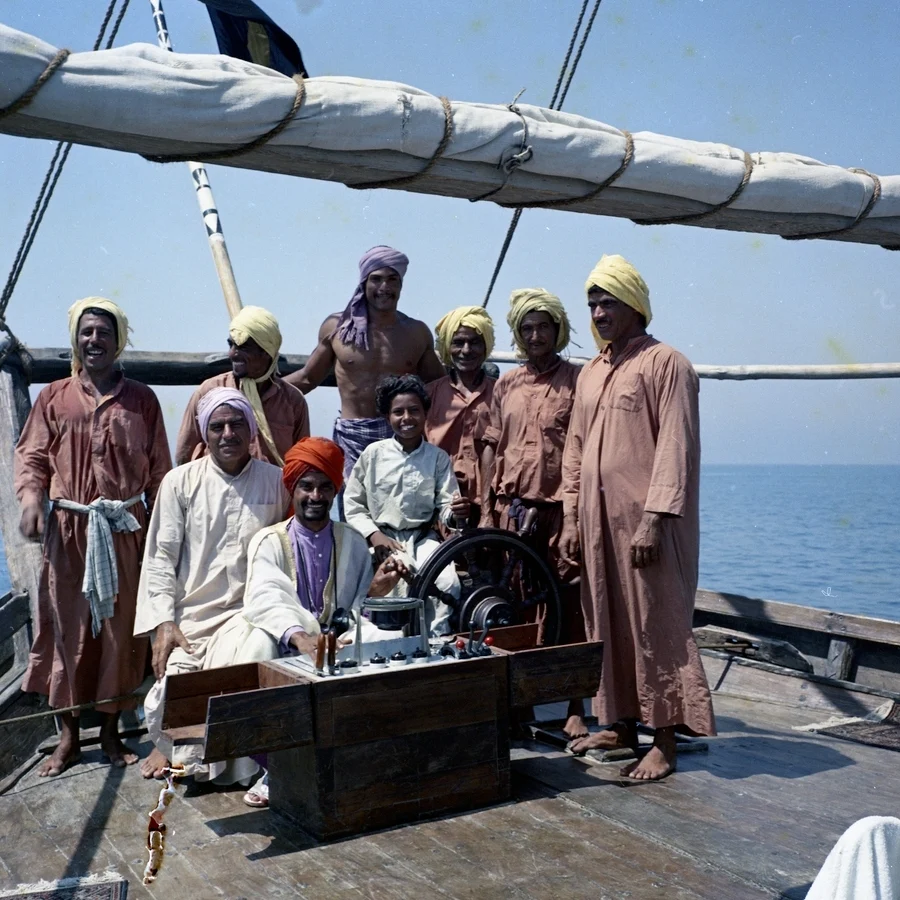
Hamad and the Pirates was a milestone, not only for me, but for Bahrain and the Gulf. To have Disney bring a production to our shores was something unimaginable at the time. Working with them was a revelation, their precision, planning, and creative discipline were unlike anything I had seen. Yet what made it truly special was seeing Bahraini and Gulf culture through their lens, and helping them see it through ours. It was the first time many of our people saw how film could connect cultures, how a story from this part of the world could resonate far beyond it. I felt proud to be part of that bridge, to show that our stories, our people, and our landscapes could stand alongside the world’s.
FILMING THE FIRST MEETING OF GULF RULERS IN DUBAI MUST HAVE BEEN EXTRAORDINARY. WHAT WAS IT LIKE WITNESSING HISTORY FIRSTHAND, AND DID YOU EVER FEEL THE WEIGHT OF PRESERVING HISTORY THROUGH YOUR LENS?
That day remains one of the most profound moments of my life. I was standing in the room with the rulers of my beloved Bahrain and the Gulf, men who would go on to shape our region’s future. There was a sense of quiet purpose, no grand speeches, just a shared understanding that something historic was beginning. As I looked through the viewfinder, I remember thinking, these are not just frames of film, they are the first pages of a new chapter for our part of the world. I felt the weight of responsibility. A camera, in moments like that, is not merely a machine, it becomes a witness. I knew that decades later, people would look at those images to understand how unity was born. That sense of duty to history has never left me.
YOUR WORK SPANS MORE THAN 50 YEARS OF BAHRAIN’S HISTORY. WHICH MOMENTS OR CHANGES HAVE BEEN THE MOST SIGNIFICANT OR SURPRISING TO CAPTURE?
Bahrain has transformed more in my lifetime than many countries do in a century. I’ve seen the island move from simplicity to sophistication, from a quiet pearl-diving society to a modern, confident nation. The most surprising thing, though, is how the spirit of Bahrain has stayed the same. Whether I was photographing a fisherman mending his net in the 1950s or a skyscraper rising over Manama decades later, there’s always been a sense of resilience and warmth in the people. That continuity, that heart, is what I’ve tried to capture more than anything else.
OF ALL THE DOCUMENTARIES AND FILMS YOU DIRECTED, WHICH PROJECT CHALLENGED YOU THE MOST AND WHY?
Without question, Hamad and the Pirates was the most challenging, and the most defining, experience of my career. Working on a Disney production in the Gulf in those years was something no one could have imagined. It was uncharted territory, not just for me, but for the entire region. The scale of the production, the technology, the discipline of the crew, it demanded precision I had never been exposed to before. Every frame, every light, every movement was meticulously planned. But beyond the technical challenges, there was a cultural one. I felt a deep responsibility to ensure that our people and our landscape were portrayed authentically, not as a backdrop, but as the heart of the story. I became, in a sense, a bridge between two worlds, helping an international team understand our traditions, our faces, our sea. It was exhausting, exhilarating, and at times overwhelming, but when I saw the finished film, I knew it had been worth it. Hamad and the Pirates showed that a Bahraini story could travel beyond our shores, and it proved that the Gulf could stand shoulder to shoulder with global cinema. That realization changed everything, for me and, I believe, for what came after.
LOOKING BACK AT YOUR PHOTOGRAPHIC WORK, IS THERE A PARTICULAR IMAGE OR SERIES THAT YOU FEEL HAD THE GREATEST IMPACT, EITHER CULTURALLY OR PERSONALLY, AND WHY?
There’s one image that stays with me, a group of pearl divers returning to shore, their faces lined with exhaustion but lit with pride. It was taken in the early 1960s, when the old Bahrain was giving way to the new. That photograph captured a way of life that would soon vanish. It became more than just an image, it became a memory for the nation. People still come up to me and say, “That was my uncle,” or “That was my village.” Moments like that remind me why I do what I do, because photography gives people back their stories.
THE KHALIFA SHAHEEN ARCHIVE CONTAINS APPROXIMATELY 250,000 IMAGES SPANNING MORE THAN 55 YEARS. CAN YOU TELL US ABOUT THE CREATION OF THIS ARCHIVE, WHAT IT MEANS TO YOU, AND HOW YOU HOPE IT WILL BE USED BY FUTURE GENERATIONS?
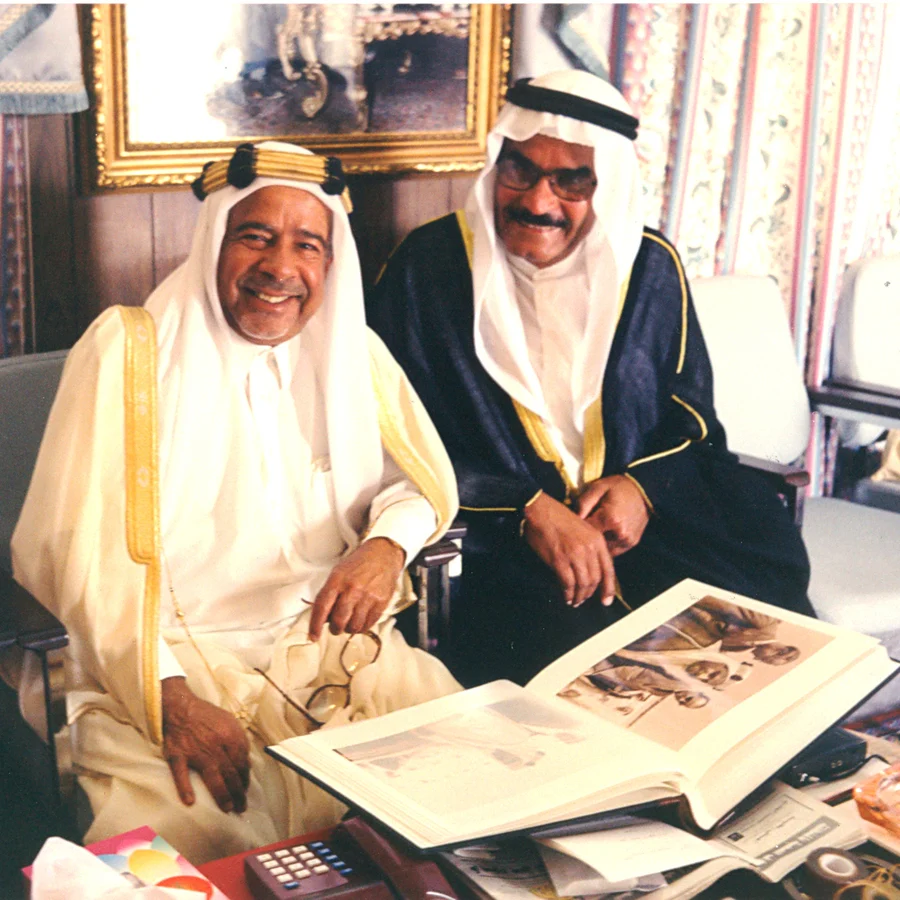
The archive began without me realizing it. Every roll of film I shot, whether a royal ceremony, a fisherman’s dawn, or a child running through Muharraq’s narrow alleys, I kept everything. Over the decades, the collection grew until I realized I had captured the life of a nation. The Khalifa Shaheen Archive is not just mine, it belongs to Bahrain. It tells our collective story, our celebrations, our struggles, our transformations. Each frame holds a heartbeat of a moment that might otherwise have been forgotten. My hope is that future generations will use it to understand where we came from, that historians, artists, and young Bahrainis will look into those images and feel pride in their heritage. Film and photography can preserve memory long after we are gone, that, to me, is the greatest legacy one can leave.