

















WITH YOUR EARLY GROUNDING IN HOSPITALITY AND YOUR BELIEF THAT SERVICE IS ABOUT PRESENCE RATHER THAN PERFORMANCE, HOW ARE YOU EMBEDDING THAT PHILOSOPHY INTO THE OPERATIONAL FABRIC OF SIX & SIX SO THAT THE GUEST EXPERIENCE FEELS INTUITIVE RATHER THAN CHOREOGRAPHED?
I believe we sometimes overcomplicate service. When I say it’s about presence rather than performance, I mean something quite simple. Guests can sense when someone is “doing service” and when someone is genuinely there with them. The first feels rehearsed. The second feels human. At SIX & SIX PRIVATE ISLANDS, we are careful to safeguard authenticity in the way our teams engage with guests. We do not begin with scripts or service sequences. We begin with culture. Our People of the Islands culture is not a concept we brief and move on from. It is how we expect our teams to see themselves – as hosts rooted in this place. When that grounding is clear, behaviour becomes more natural. The Edhurun or Butler Programme is a good example. In many resorts, a butler is trained to anticipate in a structured way. Here, the Edhuru is positioned as a mentor. That changes the dynamic. Instead of running through a checklist, they spend time listening, observing, understanding the pace of each guest. One family may want guidance and storytelling. Another may want space and silence. An Edhuru is empowered to respond to that rhythm, not to a template. We also look closely at how design supports this philosophy. Architecture shapes behaviour. If a dining space feels open and connected to the sea, service will naturally slow down. If pathways encourage chance encounters rather than formal arrivals, conversations happen more organically. Operations, design and story must align. Otherwise, you end up asking people to behave in ways the space does not support. As we prepare two islands within one portfolio, my focus is on consistency of tone rather than uniformity of process. I want teams who are confident enough to be calm, to read a moment, to act without needing constant instruction. When leadership is steady and people- first, that confidence grows. Ultimately, if a guest leaves feeling understood rather than impressed, we have done our job. That is presence. And that is what we are building into the DNA of SIX & SIX.
AS THE “PEOPLE OF THE ISLANDS,” THE RAYYITHUN CONCEPT IS CENTRAL TO YOUR BRAND. HOW DO YOU MOVE THIS FROM A HIGH-LEVEL VISION TO A LIVED EXPERIENCE FOR YOUR TEAM MEMBERS ON THE GROUND?
For me, Rayyithun only works if it stops being a concept and starts being a mirror. If our people cannot see themselves in it, then it is just language. So, we began very simply. We asked: what does it mean to belong to these islands, not just to work on them? Rayyithun is framed as “People of the Islands,” but on the ground it translates into everyday behaviour. How we greet one another. How we resolve tension. How we share responsibility. Culture comes before systems. If that foundation is right, the systems make sense. Practically, this shows up in how we hire and how we onboard. We recruit for mindset before skill. During induction, we do not start with brand standards. We start with story. We talk about the Maldives, about community, about the role each person plays within a larger rhythm. The Edhurun/Butlers are introduced not as senior staff, but as mentors – people responsible for guiding others, not supervising them. That subtle shift changes the tone of the entire operation. We also design the environment to reinforce it. Spaces for team gatherings are not afterthoughts. They are intentional. When team members feel seen and supported in their own spaces, they extend that same care outward. Rayyithun becomes lived when decision-making reflects it. If something goes wrong, the question is not “who is at fault?” but “how do we restore balance?” That mindset builds trust. And trust builds confidence. From there, guest experience becomes intuitive because the team is operating from shared values rather than instructions. As we are opening six islands. Rayyithun is the thread that connects them. As we grow, my focus is to protect that thread to ensure that scale never dilutes identity. If our people feel that this is their story as much as ours, then the vision will never remain high level. It will live in the way they stand, speak and show up every day.
YOU WORK ACROSS DEVELOPMENT AND DESIGN AS MUCH AS OPERATIONS. HOW DOES THE ARCHITECTURAL “STORY” OF THE ISLANDS INFLUENCE THE WAY YOUR TEAMS MOVE AND SERVE WITHIN THOSE SPACES?
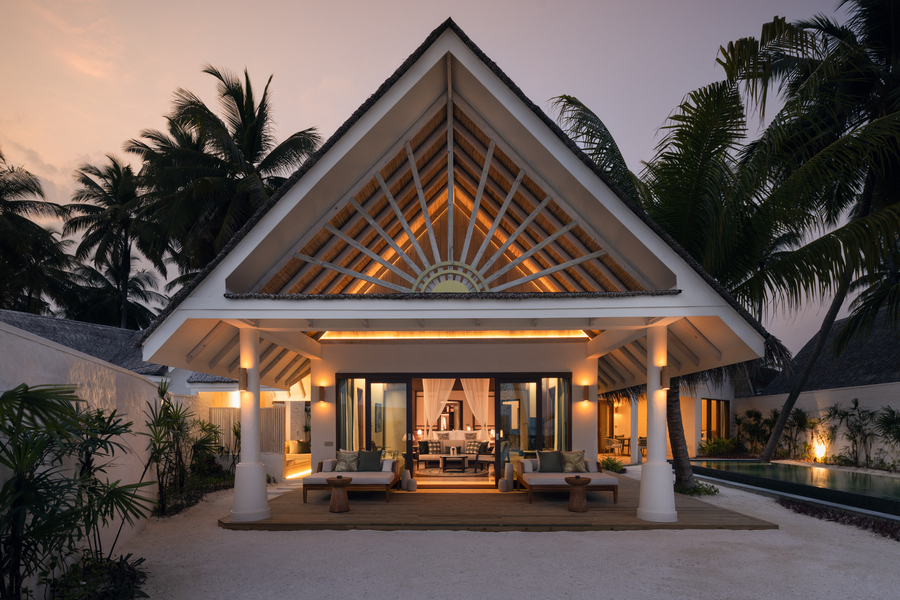
Architecture sets the tone long before a team member says a word. It shapes behavior quietly. If a space feels open, grounded and connected to the sea, it invites a different kind of service. Softer. Slower. More attentive. Design is not aesthetic. It is behavioral. Both our principals are deeply involved in the design direction of each island. The architectural language, material choices and sense of scale are shaped at that level with clear intent. My role, working closely with them, is to ensure that operational flow, layout and guest journey are fully considered from the outset. We look carefully at movement patterns, service access, back-of-house transitions and how the team and guest will naturally interact within each space.
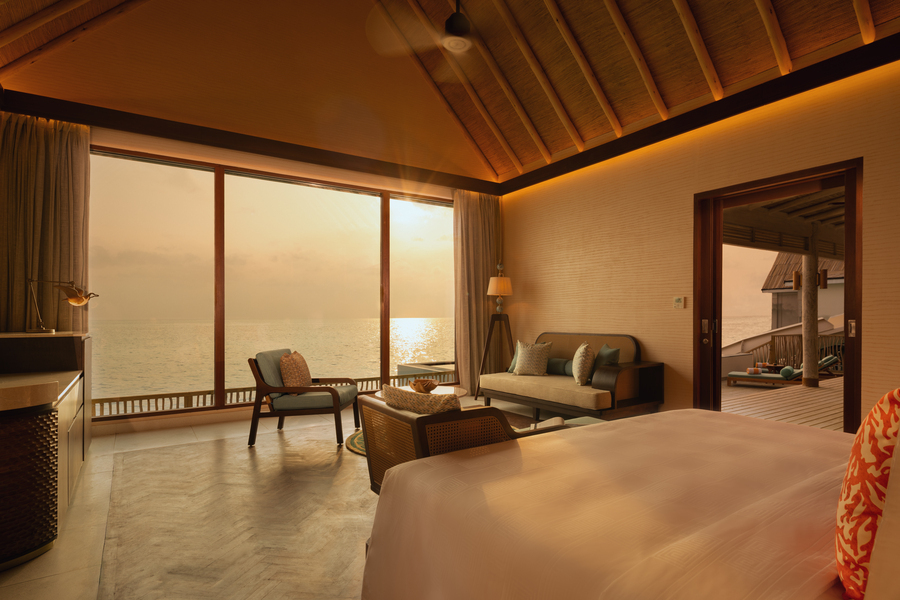
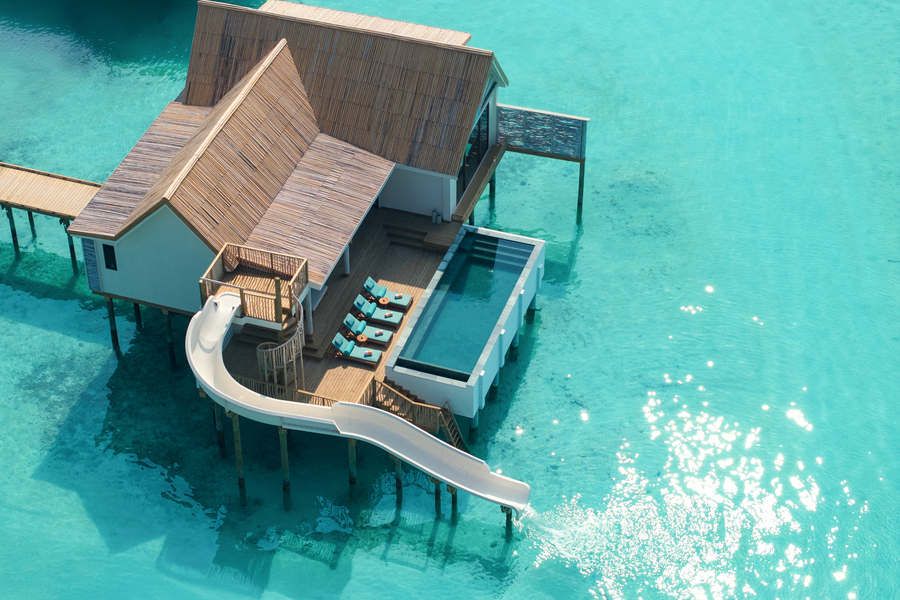
That discussion between design and operations starts early. It prevents us from creating something that later needs to be “managed.” The space should already support the rhythm we want. Take the dining venues. When a restaurant opens towards the horizon rather than enclosing the guest, service cannot feel theatrical. It must respect the view, the light and the pace of the sea. That affects how a team member approaches a table, how long they remain present, even the tone of voice they use. You do not rush in a space that asks you to breathe. The villas follow the same principle. Privacy is designed into the architecture. As a result, service becomes discreet by default. A butler reads the layout and understands where presence is welcome and where distance is more appropriate. The building itself provides cues. That reduces the need for excessive instruction. Across the two islands, each has its own personality, yet both belong to one constellation. The architectural story anchors them in the Maldives in materiality, scale and the seamless blending of indoor and outdoor living. Our teams are trained to move with that story, not against it. When design, story and operations are aligned, behavior feels natural. The team does not perform within the space. They respond to it. And that is when service becomes intuitive because the architecture has already set the rhythm.
HAVING MANAGED LUXURY PROPERTIES ACROSS THE INDIAN OCEAN, YOU ARE NO STRANGER TO THE COMPLEXITIES OF REMOTE OPERATIONS. WHAT IS THE GREATEST “UNSEEN” CHALLENGE IN LAUNCHING TWO PRIVATE ISLANDS SIMULTANEOUSLY IN 2026?
The obvious challenges in remote operations are logistics, supply chains, timelines. You plan for those. You build buffers. You track them daily. The unseen challenge is alignment of energy. When you launch one island, the focus is singular. When you launch two within the same year, especially as part of one portfolio like SIX & SIX PRIVATE ISLANDS, the risk is not operational failure. It is dilution of attention. Culture can fragment quietly if you are not careful. Both islands will have their own architectural story, their own pace. But they are anchored in the same philosophy. The unseen work is ensuring that this identity feels coherent across locations without becoming rigid. That requires constant dialogue between teams before doors even open. A practical example is leadership calibration. We bring department heads from both islands together early, not to review policies, but to discuss tone. How do we want a guest to feel on arrival? How do we want recovery to feel if something goes wrong? Those conversations shape behaviour long before operations manuals are finalized. Remote environments also amplify small cultural fractures. On an island, you cannot step away from the workplace in the same way you might in a city. Community and operation are intertwined. So, we invest heavily in internal mentorship and in spaces where teams can reset and connect. If the internal rhythm is off, guests will sense it immediately. The real challenge, often unseen, is keeping the organisation steady while momentum accelerates. Two openings mean pressure. But pressure should never translate into tension on the ground. If we succeed, guests will never see the complexity behind it. They will experience two islands that feel assured, steady and connected – distinct in character, yet unmistakably part of the same constellation. That quiet coherence is the real work.
WITH THE FIRST OF YOUR SIX RESORTS NOW OPEN AND THE SECOND OPENING LATER THIS YEAR, WHAT OPERATIONAL LANGUAGE ARE YOU CREATING THAT WILL DISTINGUISH SIX & SIX FROM THE ESTABLISHED LUXURY PLAYERS IN THE MALDIVES?
When I speak about operational language, I’m really talking about the tone of how we run the island. Not branded terms, not new labels. Tone. In the Maldives, luxury has often been expressed through perfection and polish. Flawless transfers. Formal greetings. Structured sequences. There is nothing wrong with that. But it can create distance. For us, the operational language is built around ease. For example, instead of training teams to “anticipate and impress,” we train them to observe and respond. That small shift removes performance pressure. It encourages attentiveness without theatrics. A team member does not need to create a moment. They need to read one. We are also very conscious of how we talk internally. If a delay happens, the language is not about blame or escalation. It is about adjustment. On a remote island, weather changes. Boats run late. Materials arrive differently than planned. If leadership reacts with urgency and tension, that becomes the tone of the island. So, we deliberately choose calm vocabulary. That creates stability. Another element is spatial language. We brief teams to think in terms of flow rather than control. How does a guest move through arrival? Where might they pause? Where might they want privacy? Instead of directing every step, we allow the architecture to guide and the team to support. The service feels less managed and more natural. Across two islands in one constellation, this operational language must feel coherent. It will not be about memorising phrases. It will be about shared understanding: we value composure, we value intuition, we value place. If that tone holds, we will not need to declare how we are different. Guests will simply feel that nothing is being pushed at them. The experience will unfold at their pace. And that restraint, in this market, is what will quietly set us apart.