


















YOU GREW UP IN HONG KONG, WHERE CULINARY IDENTITY IS BOTH FIERCELY PROTECTED AND CONSTANTLY EVOLVING. WHAT IS YOUR EARLIEST MEMORY THAT MADE YOU REALIZE FOOD WAS NOT MERELY SUSTENANCE, BUT DESTINY? AND HOW DOES THAT MEMORY LIVE IN YOUR DISHES TODAY?
The realization that I wanted to become a chef is an accumulation of many different experiences. I’d describe my love for cooking as something that grew over time, rather than one decisive moment. I grew up in a very ordinary Asian family where the expectation was for children to become doctors or engineers. My mind was occupied with books and exams, and I had no interest in food, let alone cooking. That being said, I’ve always enjoyed good food from a young age. I remember having Sister Song’s Fish Soup, a classic dish from Hangzhou, when I was about fourteen. It is a rather simple dish, essentially thin shreds of fish in a thickened fish broth, but the flavor is so clean while carrying so much umami. I believe that culinary philosophy has stayed with me ever since. I always strive to create something that seems simple but is packed with flavor.
THE PATH FROM HONG KONG TO HAKKASAN LONDON IS NEITHER SHORT
NOR SIMPLE. WHAT CONVINCED YOU THAT YOUR FUTURE LAY IN BECOMING A TRANSLATOR OF TRADITION FOR A GLOBAL AUDIENCE?
I believe that decision is an idea that is built over time. I was trained in Western kitchens, and it was only a few years ago that I started incorporating Chinese ingredients into my cooking. Then I joined my previous restaurant, where I interpreted Chinese cuisine through a modern European approach, and we won its first Michelin star at the end of my first year. I was then fortunate enough to host pop-ups in different parts of the world. Seeing diners from completely different backgrounds respond to the food made me realize that what I was cooking was not only relevant to guests in Hong Kong but could speak to people from around the world. Those experiences planted the seed for me to think about working on a global platform. I have always known Hakkasan, so I’d like to see myself as part of the missing puzzle as Hakkasan enters its 25th anniversary. I’m not an ordinary Chinese chef, and I’m certain Hakkasan is the platform I need not only to take my game to the next level, but also to share what I love to cook and represent culturally. You could say it was the guests I served who gave me confidence and pushed me forward to this stage.
WINNING THE MICHELIN GUIDE YOUNG CHEF AWARD 2024 PLACES YOU IN EXTRAORDINARY COMPANY. DID THE RECOGNITION FEEL LIKE VALIDATION, OR DID IT INTENSIFY THE PRESSURE TO KEEP PROVING YOURSELF?
I certainly think of the award as one of the milestones in my career because it proved that someone out there agreed with what I was doing. It does feel like validation, but I also see it as encouragement. I’m not a classically trained Chinese chef to begin with, so I’m comfortable being judged through a European lens. But I personally don’t see a huge gap between Eastern and European gastronomic values. We all love good food, no matter where we come from. I believe the greatest validation comes from within the restaurant, whether that is from the diners or the team around me. The award gave me confidence but also encouraged me to keep pushing myself further.
AS R&D CHEF FOR HAKKASAN GROUP, YOU ARE SHAPING THE CULINARY IDENTITY OF A BRAND THAT SPANS CONTINENTS. HOW DO YOU BALANCE ITS PRINCIPLES WITH THE EXPECTATIONS OF DINERS IN DIFFERENT CITIES?
The main culinary principles should be applied across the group. These are our design language and the standards we use to evaluate ourselves, and they should hold true no matter which part of the world we cook in. Guests have slightly different expectations depending on where they come from. That means adjusting the portion size, menu structure, and pricing. But they also come to Hakkasan for a reason, and they understand what we offer as a brand. We hold on to our culinary values and adjust accordingly to suit the needs of our guests.
THE WOK IS DESCRIBED AS AN EXTENSION OF A CANTONESE CHEF’S ARM, YET MASTERY OF WOK HEI CAN TAKE DECADES. CAN IT BE TAUGHT SYSTEMATICALLY, OR MUST IT BE BURNED INTO MUSCLE MEMORY THROUGH REPETITION?
I always find it fascinating that cooking is similar to sports. I think we all agree that football is taught systematically nowadays, with well-structured academy systems and advanced technology. But to master the skills, you still must go through thousands of training sessions just to perfect a free kick, for example. The same applies to wok skills. It takes time and effort to develop and master them. People often see Chinese cooking as spontaneous, or in a worse sense, chaotic. But we are doing hundreds, sometimes thousands, of covers per day at Hakkasan. We build systems, and the wok is merely a technique to express what we want to present. It’s a cooking skill that is well organized and monitored. There’s no difference between Western barbecuing and Chinese wok frying in a structured professional kitchen.
LUXURY DINING TODAY IS AS MUCH ABOUT NARRATIVE AS FLAVOR. HOW DO YOU CRAFT THE ARC OF A TASTING MENU, AND WHAT DO YOU WANT GUESTS TO UNDERSTAND BEFORE THEY LIFT THEIR CHOPSTICKS?
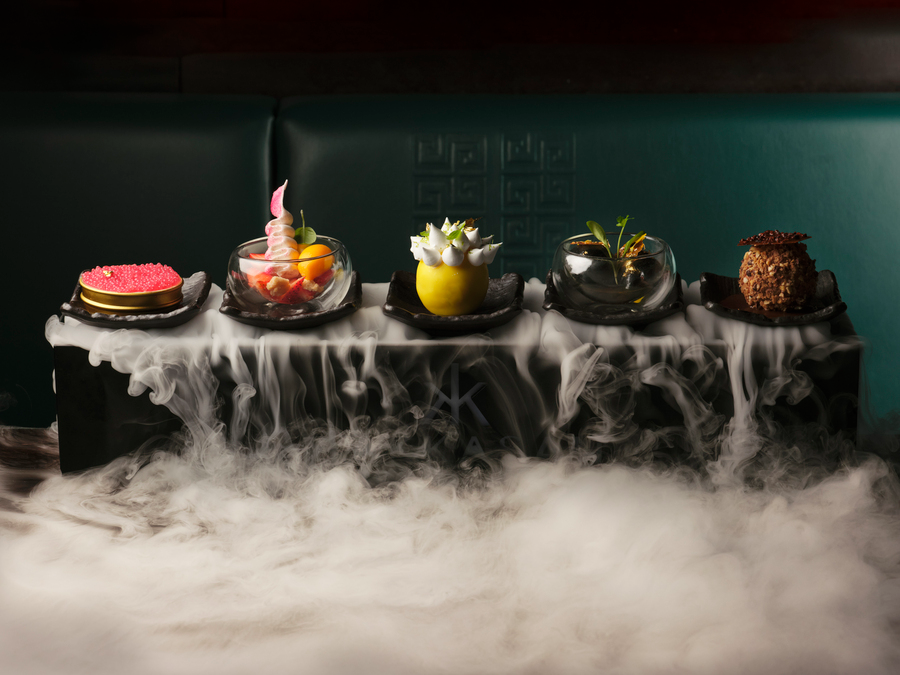
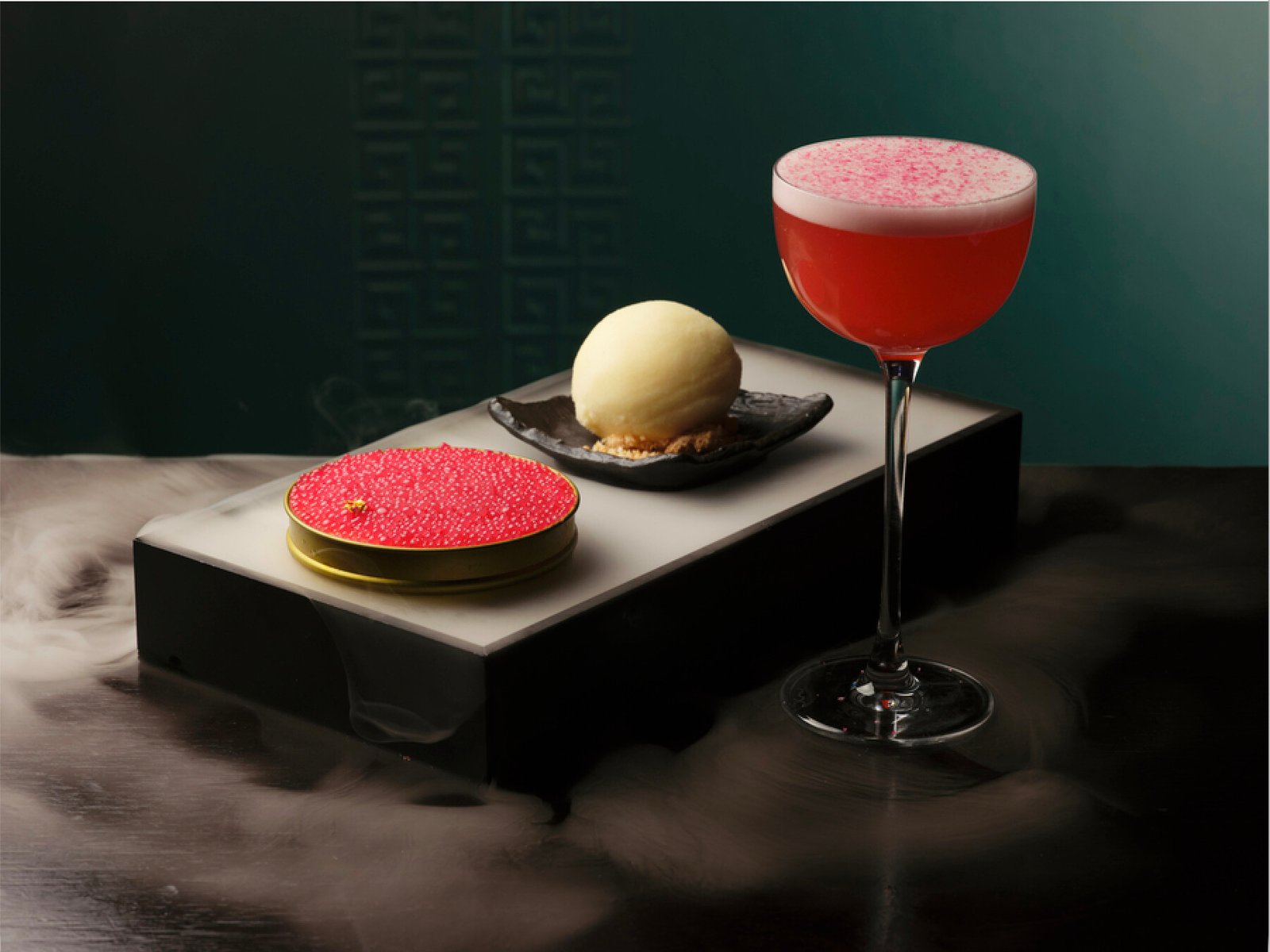
I often view a tasting menu as a movie, with a proper beginning, development, twist, climax, and ending. And this movie should reflect some degree of Chinese identity, which can be interpreted through Chinese ingredients, techniques, or cultural references. It can also reflect where we are today. We use local seasonal ingredients and modern techniques while retaining the essence that connects us to Chinese cuisine. The flavor should be clean and unmistakably Cantonese. And we build depth of flavor with dried or fermented products from China, supported by fresh, local seasonal produce from around the UK. Not everyone is a foodie, and I’m certain that most diners don’t order a tasting menu expecting a story. We do have stories of culinary culture behind everything we do, but at the end of the day, I’m happy to go home if the guests simply enjoy their time at Hakkasan.
LET US IMAGINE A DECADE FROM NOW. WHAT WOULD SUCCESS LOOK LIKE TO YOU, AND WHAT LEGACY ARE YOU QUIETLY BUILDING EVERY TIME YOU STEP INTO THE KITCHEN?
I’d hope to see a shift in the way people perceive modern Chinese cuisine. I’ve always found Chinese food to be the most nourishing, and I believe that is what people are craving in modern times. I wish to challenge the way people perceive what Chinese cuisine can be. We talked about the twenty-four micro-seasons, and all of these are related to how human beings adapt to and coexist with nature. We are living in an age of turmoil, and I think we really need to occasionally enjoy some good, healthy comfort food with good company. The legacy I want to build is simply to create places where people can escape from reality for a few hours and feel better when they walk out the door.