






















YOU WORK UNDER THE ARTISTIC LENS “MR. APEX,” A NAME THAT ORIGINALLY CARRIED ITS OWN LAYERED MEANING. HOW DOES THIS PERSPECTIVE DIFFER FROM GUNJIT PURSWANI THE INDIVIDUAL, AND WHY WAS IT CREATIVELY IMPORTANT FOR YOU TO ESTABLISH THAT DISTINCTION BETWEEN YOUR PERSONAL IDENTITY AND YOUR PROFESSIONAL STUDIO PRACTICE?
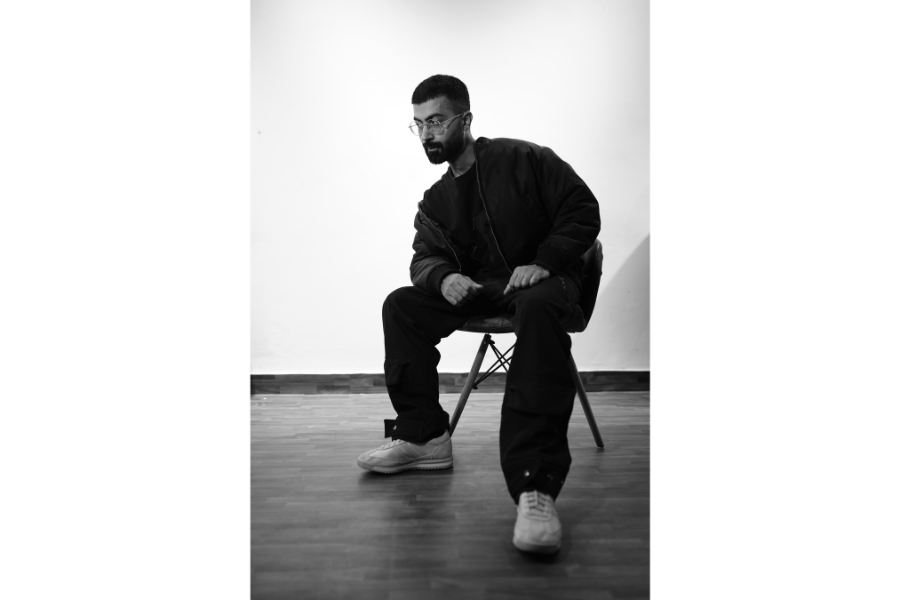
Mr. Apex is not a pseudonym. It is a conceptual framework for my practice across painting and sculpture. Gunjit is the individual shaped by lived experience, while Mr. Apex is the lens through which I examine symbolism, aspiration, and how desirability is created in contemporary culture. The studio executes at scale, but the conceptual direction is singular. That distinction clarified authorship. The work is not driven by production capacity. It is driven by inquiry. The lens allows me to look at the symbols we chase and ask what they’re really doing to us. I want the work to feel inevitable, not trendy.
YOUR HIGHLY REFLECTIVE CHROME SCULPTURES HAVE BECOME A VISUAL SIGNATURE OF YOUR PRACTICE, INSTANTLY RECOGNIZABLE IN BOTH PUBLIC AND COLLECTOR CONTEXTS. WHAT INITIALLY DREW YOU TO CHROME AS A MATERIAL, AND HOW DO YOU SEE ITS MIRROR- LIKE QUALITY INTERACTING WITH YOUR BROADER EXPLORATION OF ASPIRATION, VALUE, AND SELF-PERCEPTION?
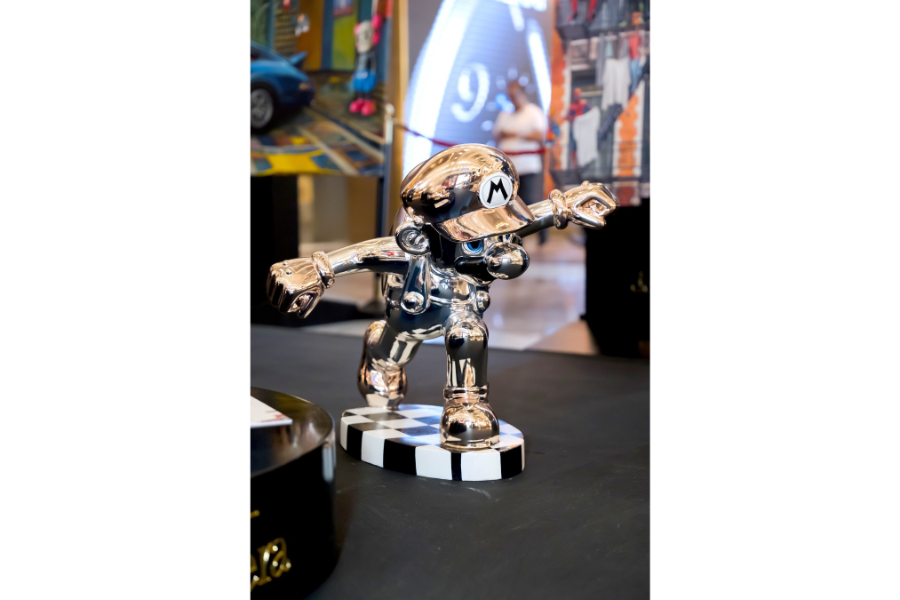
Chrome carries industrial discipline and aspirational language simultaneously. It references automotive bodies, precision hardware, and trophy surfaces. Before the form is interpreted, the material already signals value. I was drawn to that pre-loaded meaning. I’m interested in that lineage where surface becomes content, from Pop through contemporary finish culture. The reflective surface also removes distance. When someone stands before a chrome sculpture, they are visually embedded within it. That shift is intentional. It transforms the object into an encounter. While chrome is central to the sculptural works, the same inquiry into aspiration and iconography extends into my paintings, particularly within the Soirée Series.
YOU’VE CREATED DISTINCT BODIES OF WORK SUCH AS NOSTALGIA IN CHROME, LOVE, MISPLACED, AND THE SOIRÉE SERIES. WHILE THEY APPEAR VISUALLY DIFFERENT, IS THERE AN UNDERLYING CONCEPTUAL THREAD THAT CONNECTS THEM ACROSS TIME, OR DOES EACH REPRESENT A SPECIFIC CULTURAL MOMENT WITHIN YOUR PRACTICE?
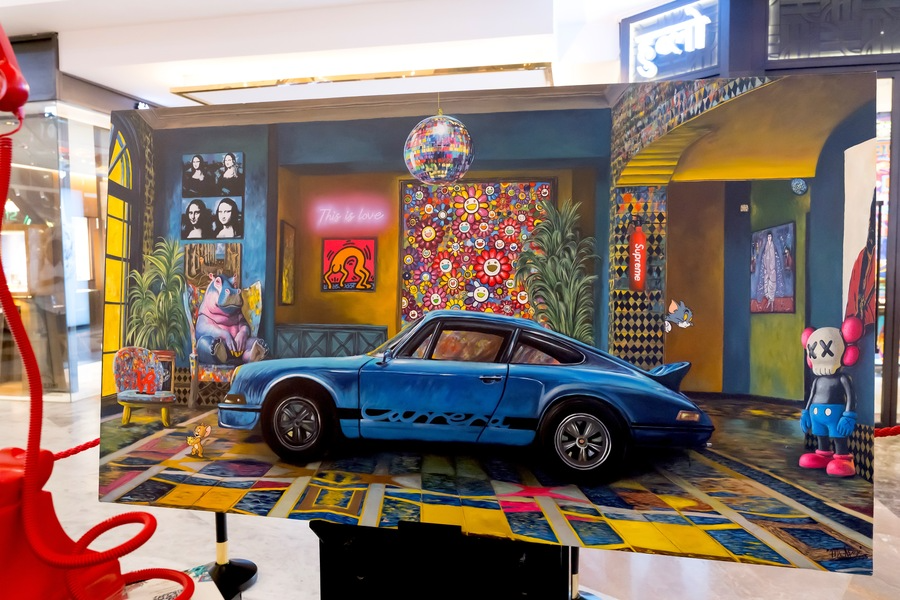
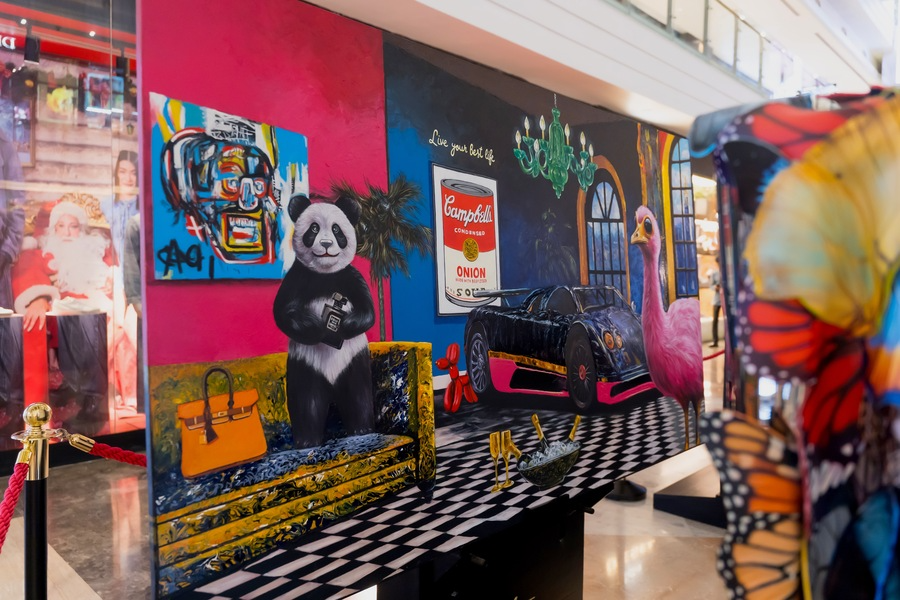
There is a consistent inquiry into how symbols acquire power. In Nostalgia in Chrome, I revisit childhood iconography and render it through the material language of luxury. A character once associated with innocence is reframed as a collectible artifact. In Love, Misplaced, the astronaut becomes a metaphor for containment and emotional distance. The polished surface suggests control. The gesture introduces vulnerability. In the Soirée Series, I stage luxury automobiles inside composed interiors. The car shifts from machine to emblem. Across all three, I am asking why certain symbols accumulate authority in a given moment.
IN THE SOIRÉE SERIES, YOU PLACE LUXURY AUTOMOBILES INSIDE CAREFULLY CURATED INTERIOR ENVIRONMENTS, OFTEN STAGING THEM WITH THE GRAVITY OF SACRED OBJECTS. WHAT FASCINATES YOU ABOUT CARS AS ICONOGRAPHY WITHIN YOUR WORK, AND WHY RECONTEXTUALIZE THEM IN THIS WAY?
Within my visual language, cars function as contemporary emblems. A Ferrari or Porsche represents more than engineering. It signifies beauty, form, sculptural silhouette, and sensuality. Much like Birkin bag in fashion culture, the object carries layered social meaning beyond function. By placing the vehicle inside a composed interior setting, I shift the context. The car becomes subject. The room becomes framing. The automobile is one of the clearest contemporary emblems of aspiration, and I use it deliberately.
LOVE, MISPLACED PRESENTS ASTRONAUTS HOLDING FRAGILE SYMBOLS OF AFFECTION, RENDERED IN IMMACULATE CHROME. THE CONTRAST BETWEEN EMOTIONAL VULNERABILITY AND ENGINEERED SURFACE IS STRIKING. WHAT WERE YOU EXPLORING THROUGH THAT JUXTAPOSITION?
The astronaut is engineered for survival in isolation. That imagery already carries emotional distance. When I pair that figure with a delicate symbol such as a heart, the contrast intensifies. The exterior reads as resilient. The gesture reads as vulnerable. The series reflects on how emotional expression operates within environments that prioritize performance and achievement. It’s about how we protect ourselves in systems that reward performance over vulnerability.
NOSTALGIA IN CHROME REVISITS CHILDHOOD CHARACTERS AND REIMAGINES THEM AS HIGH-GLOSS SCULPTURAL FORMS. WHEN YOU TRANSFORM THESE FAMILIAR FIGURES INTO MONUMENTAL, REFLECTIVE OBJECTS, IS IT NOSTALGIA, CRITIQUE, HOMAGE, OR SOMETHING MORE ANALYTICAL AT PLAY?
It is analytical. Childhood iconography once existed within private memory. Today it circulates within global licensing systems and collector markets. When I render those characters in chrome and elevate them in scale, the transformation becomes visible. The toy becomes artifact. I am studying that evolution. How innocence transitions into commodity. How memory becomes object. The series is observational.
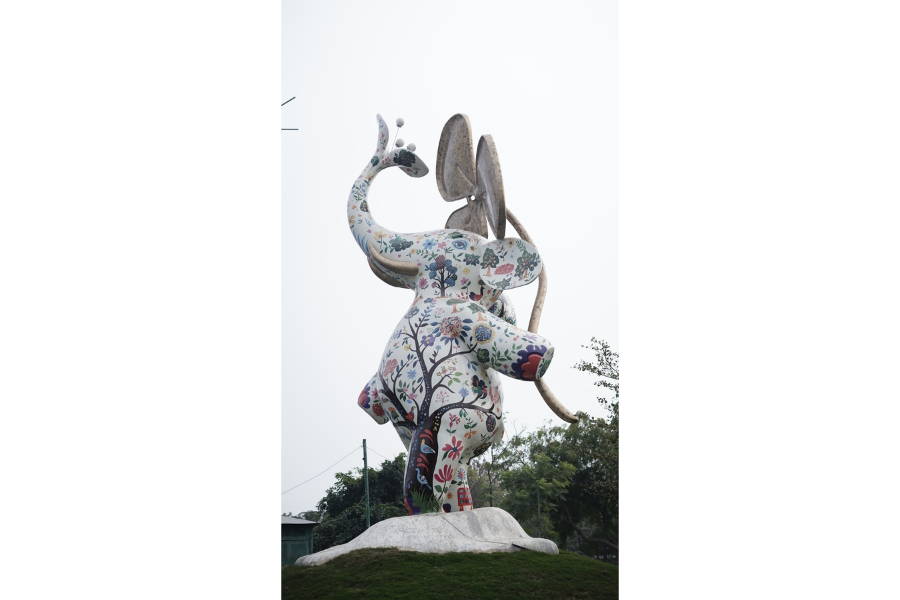
YOUR SCULPTURES HAVE APPEARED IN PUBLIC ENVIRONMENTS, YET YOU ALSO PRODUCE PAINTINGS AND SCULPTURES FOR SERIOUS PRIVATE COLLECTORS. HOW DO YOU NAVIGATE THE TENSION BETWEEN PUBLIC VISIBILITY AND THE EXCLUSIVITY OF COLLECTING CULTURE?
Context shifts perception. In public space, the work integrates into collective experience. In private collections, whether it is a chrome sculpture or a painting from the Soirée Series, the work enters a curated environment shaped by personal narrative. Whether it’s public or private, the work is built to hold presence. The setting changes the audience, not the standard.
YOU’VE COLLABORATED WITH MAJOR LIFESTYLE BRANDS LIKE HARLEY- DAVIDSON, MINI COOPER, AND MG MOTOR. HOW DO YOU MAINTAIN YOUR CULTURAL STANCE WHILE WORKING WITHIN THOSE SYSTEMS?
I don’t see collaboration and critique as opposites. Brands like Harley-Davidson, Mini, or MG Motor shape identity and taste. A Mini or a Harley isn’t just a product, it’s a shorthand people use to communicate who they are. Working with brands allows me to see how value gets assigned in real time. The key is authorship. If a project aligns conceptually, it extends the inquiry. If it doesn’t, it doesn’t move forward. I’m interested in how taste is manufactured and how certain symbols become markers of status.
MR. APEX EXAMINES HOW CERTAIN OBJECTS RISE TO THE APEX OF CULTURAL DESIRE. HOW DOES THIS FRAMEWORK INFLUENCE YOUR DAY-TO-DAY CREATIVE DECISIONS AND THE WAY YOU CONSTRUCT A BODY OF WORK OVER THE LONG TERM?
It begins with observation. When a symbol keeps showing up in people’s lives, I ask what it’s promising them. Is it security? Status? Escape? From there, I translate that inquiry into form. Material, scale, and finish are decisions driven by meaning. I’m interested in understanding why certain symbols accumulate authority and building work that can sustain that inquiry over time.
IF YOU COULD CREATE AND INSTALL ONE MONUMENTAL WORK ANYWHERE IN THE WORLD WITHOUT BUDGETARY, BUREAUCRATIC, OR LOGISTICAL CONSTRAINTS – WHERE WOULD YOU PLACE IT, AND WHAT WOULD YOU WANT IT TO COMMUNICATE WITHIN THAT SPECIFIC CONTEXT?
If given complete freedom, I would build a large-scale walk-in installation around the Soirée Series during Art Basel. The space would function as a constructed interior, with monumental paintings framing the environment and chrome automobile form resolved at architectural scale at its center. The audience wouldn’t just view aspiration. They would physically enter it. That’s the scale where the work needs to operate.
WHEN YOU THINK ABOUT THE LONG- TERM ARC OF YOUR PRACTICE, WHAT DO YOU HOPE TO BE KNOWN FOR BEYOND SPECIFIC MATERIALS, SURFACES, OR RECURRING MOTIFS?
Beyond chrome, beyond automobiles, beyond recurring motifs, I want the work to be understood as a sustained examination of how contemporary culture assigns meaning to objects. Materials will evolve. Forms will evolve. The symbols may shift with time. What should remain constant is the inquiry into authority, aspiration, and value – and the discipline of building work that holds its ground materially and conceptually. If the practice matures the way I intend it to, it won’t be remembered for a surface finish or a single series. It will be remembered for how consistently it examined the structures behind what we choose to elevate.