






















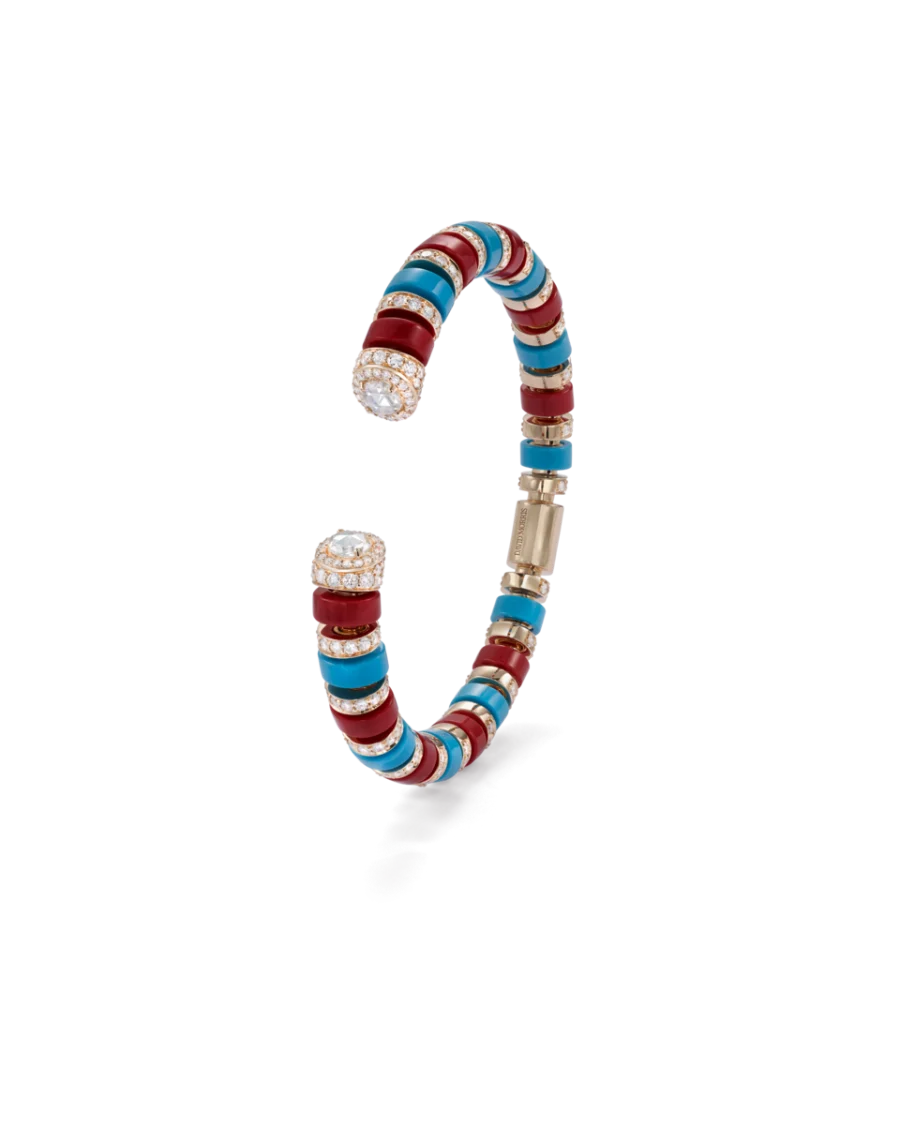
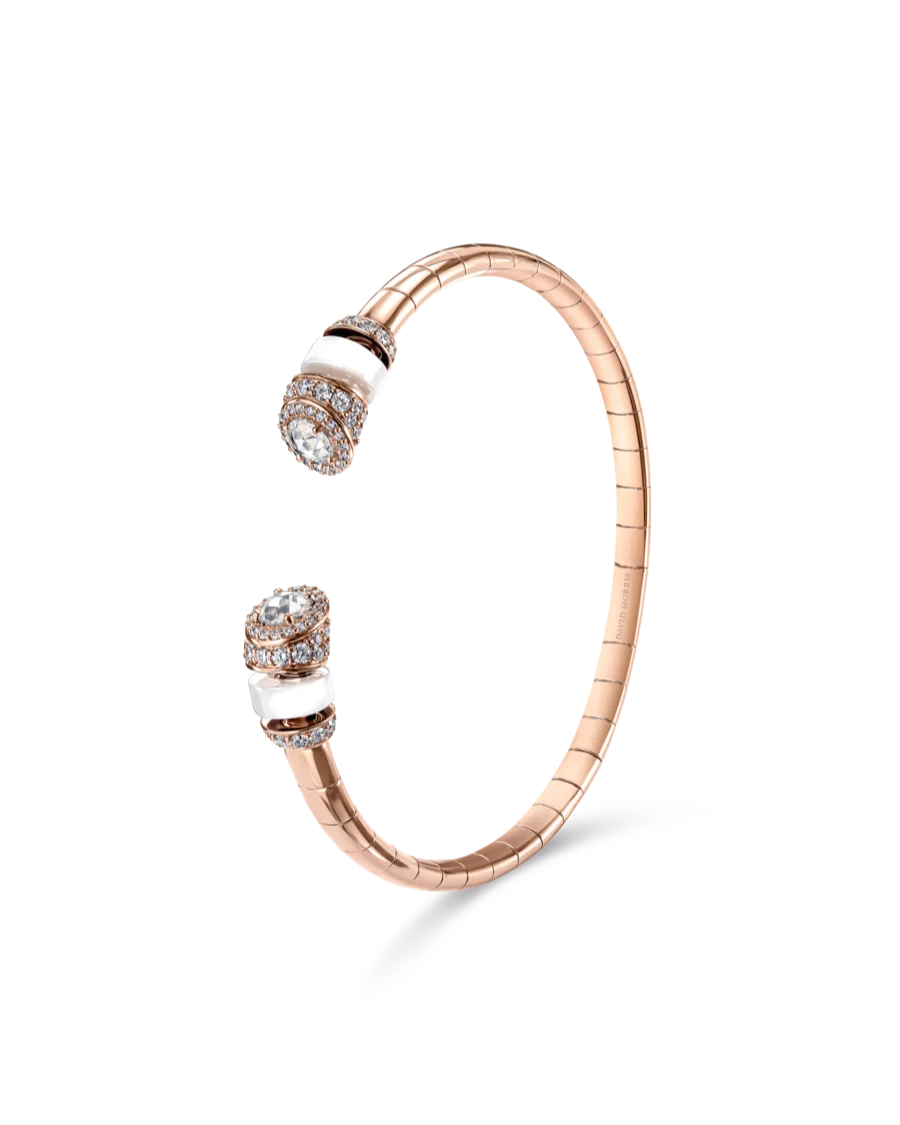
An extraordinary exhibition of the treasures discovered in Tutankhamun’s tomb has inspired the House of David Morris to create a colorful new collection for the modern-day jewellery collector. ‘Tutankhamun: Treasures of the Golden Pharaoh’, held at London’s Saatchi Gallery in 2019, brought together over 150 pieces from the boy king’s tomb for the first time, in one final touring exhibition, before they returned to Egypt forever. CEO and Creative Director of David Morris, art enthusiast and collector, Jeremy Morris, visited the exhibition and emerged inspired by the collection’s incredible use of color and exquisite craftsmanship, centuries ahead of its time. Tutankhamun’s tomb was discovered in 1922, over 3,000 years after it had been sealed at the bottom of the Valley of the Kings. Thousands of priceless objects were unearthed, many of which were jewellery not worn by the Boy King, but placed inside his sarcophagus ceremonially to smooth his passage to the afterlife.
Today, enthused by this captivating collection, the House has unveiled its homage to the vision and craft of the art of Ancient Egyptian jewellery. The collection is named Asiyah, after the Great Royal Wife of ancient Egypt’s Pharaoh of the Exodus, a woman long revered for her courage, kindness and strength of spirit, and whose story continues to inspire women of today. Many of the jewels offered to Tutankhamun were inlaid with semi-precious lapis lazuli, turquoise, carnelian and malachite, all vivid in color but chosen for their meaning, and this repetition of red, blue and green became a guiding concept for the Asiyah collection. In Ancient Egypt, the intense blue of lapis lazuli was symbolic of the night sky, while turquoise represented powerful protection – both important for a happy afterlife. Carnelian, though not rare, was prized for its fiery hue and closely connected to the sun god, Ra. The color green was also highly symbolic, representing new life, and Ancient Egyptians referred to the eternal paradise that they believed awaited them as the ‘Field of Malachite’.
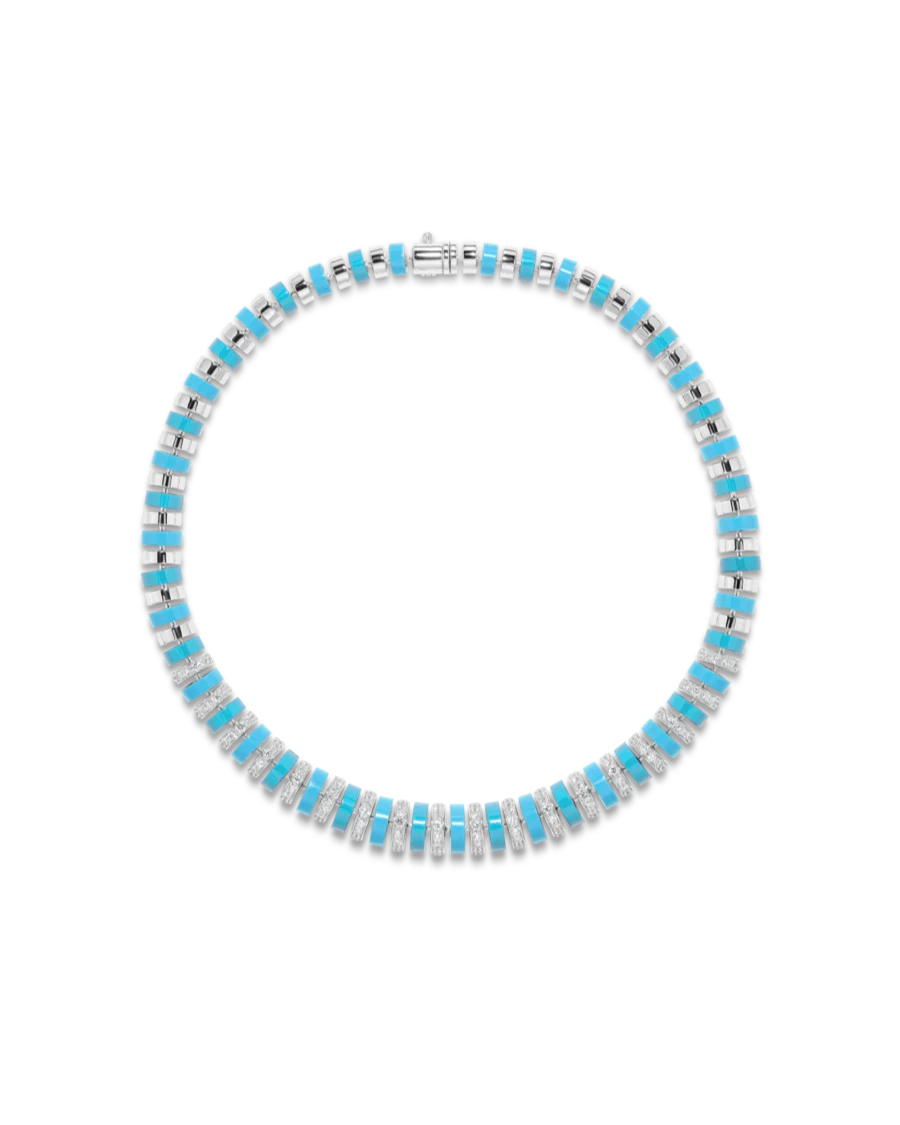
The Asiyah collection comprises drop earrings, open rings and cuffs and a chocker-style necklace inspired by the vibrant hues of the objects within the exhibition collection, whilst employing another technique pioneered by the Ancient Egyptian craftsman – the making of colored glass and ceramic. Not yet aware of the existence of diamonds, rubies and sapphires, if the color they sought was not available naturally, the Ancient Egyptians often turned to making colored glass.
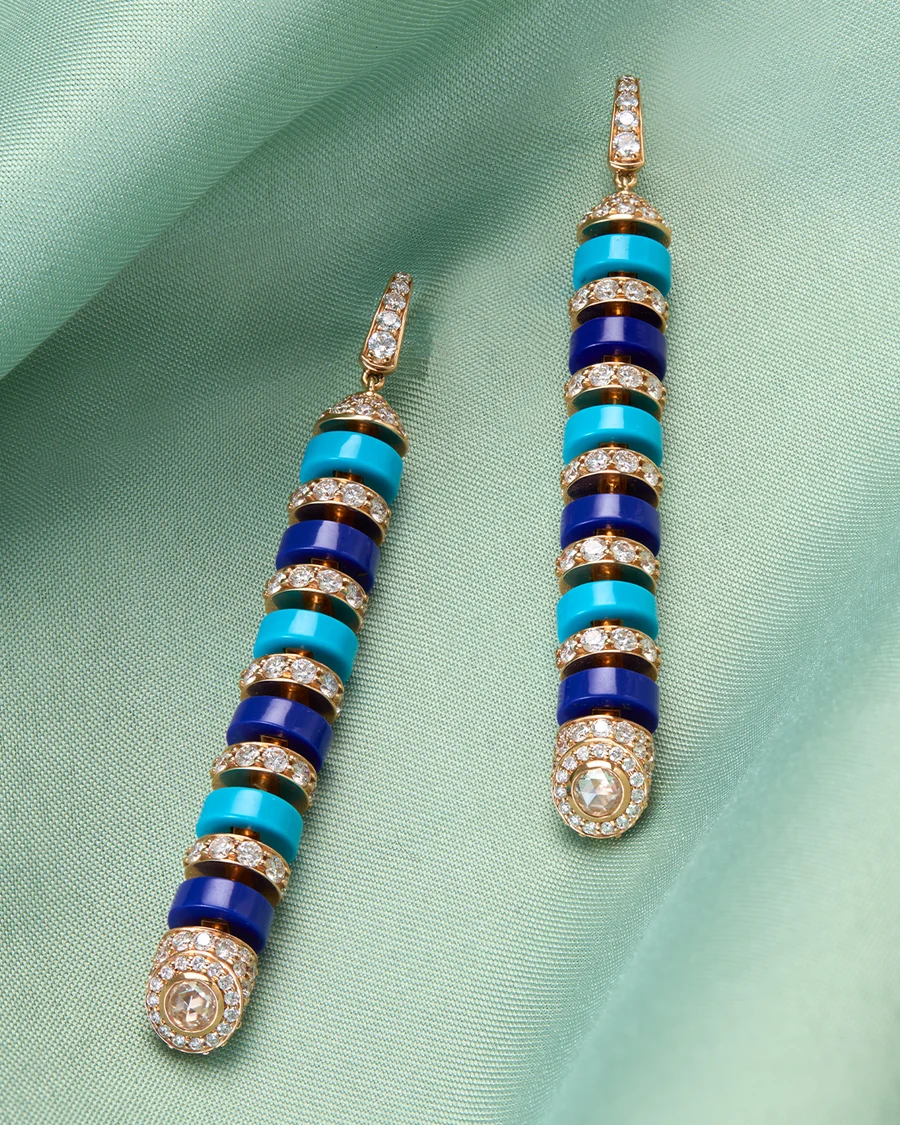
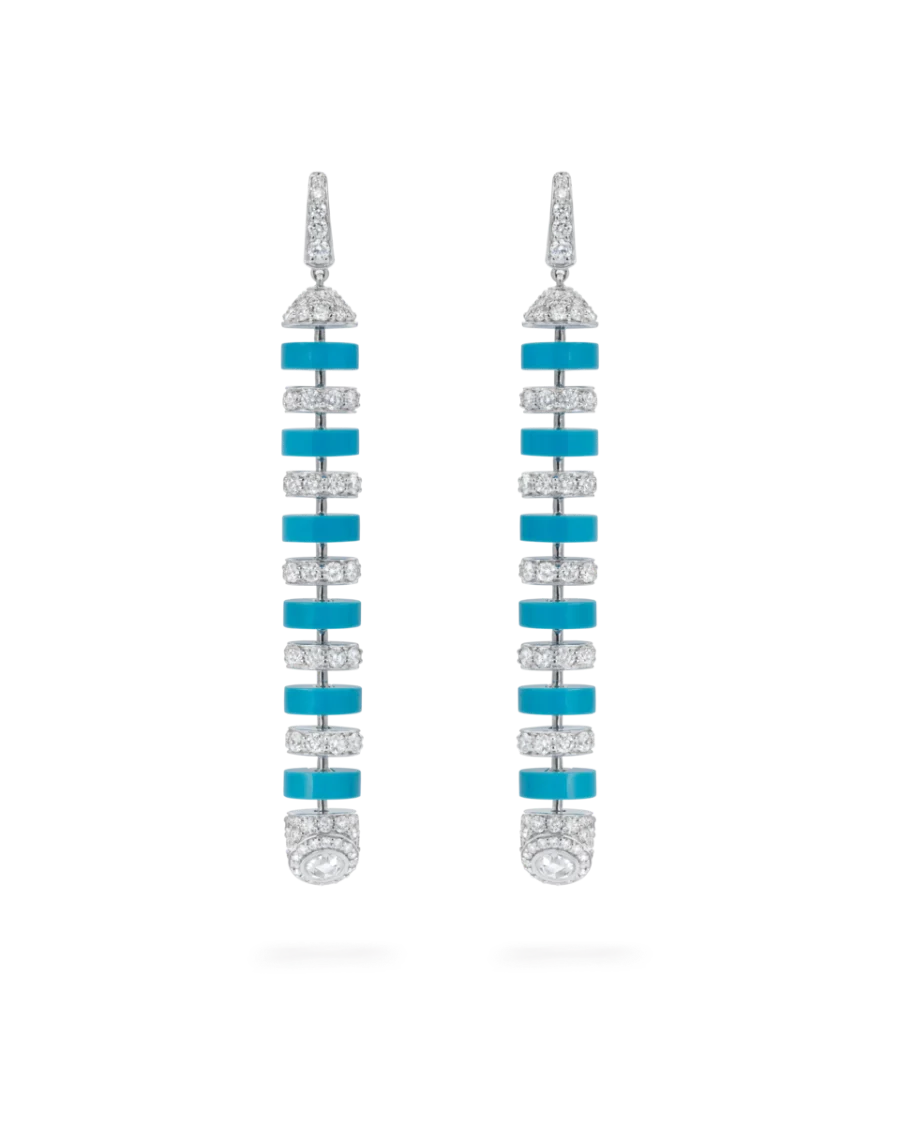
Drawing upon this tradition, the Asiyah collection fuses the brand’s signature rose cut white diamonds with finely cut discs of ceramic in vivid hues. Jeremy Morris chose to use ceramic rather than natural stones, both as a nod to the Ancient Egyptian jewellery methods and for their brightness and depth of color.
The collection’s cuff and ring both have an open design inspired by early forms of jewellery. At the opening of each piece sits a circular motif featuring a central rose cut white diamond surrounded by pavé white diamonds – an abstract interpretation of the ever-present eye symbol seen throughout Ancient Egyptian iconography, and representative of the Eye of Horus. The drop earrings possess a beautifully light feel, their alternating bejewelled and brightly-colored ceramic discs joined together using delicate gold wire for fluidity of movement. While the necklace mirrors the shape of the cuff and ring, it embraces the flexibility and delicate feel of the earrings, being articulated between each rondell of diamonds and ceramic to ensure enduring comfort for the wearer.
Each of the four Asiyah designs is available in either 18-carat rose or white gold and in a single color option – light blue, dark blue, green and red ceramic, alternated with scintillating white diamonds – as well as pieces that combine two contrasting ceramic colors, characteristic of the pieces found alongside Tutankhamun.