






















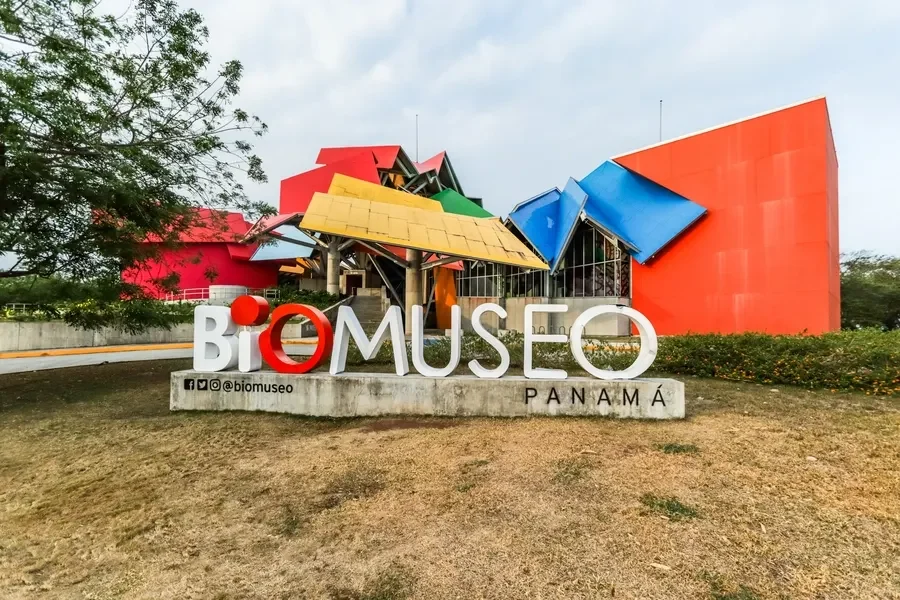

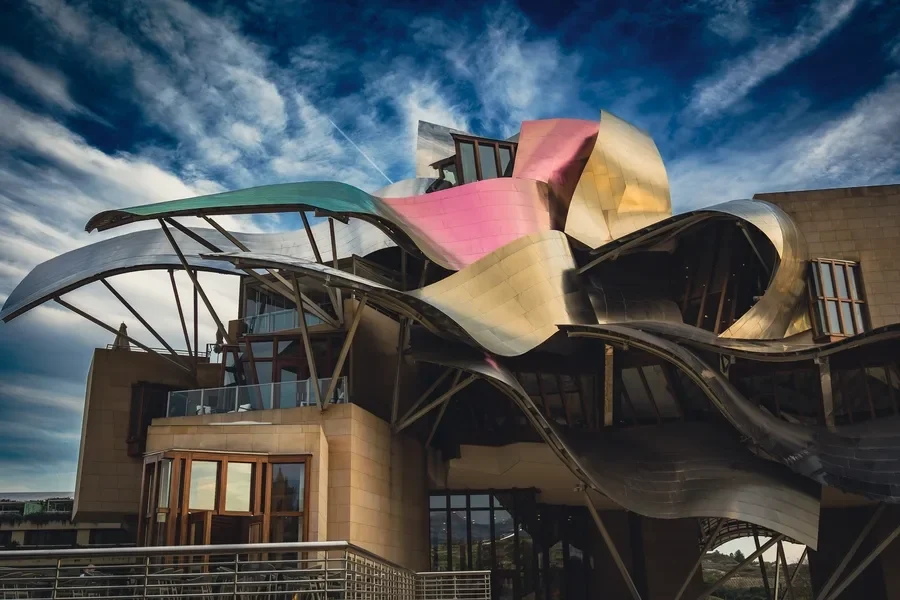
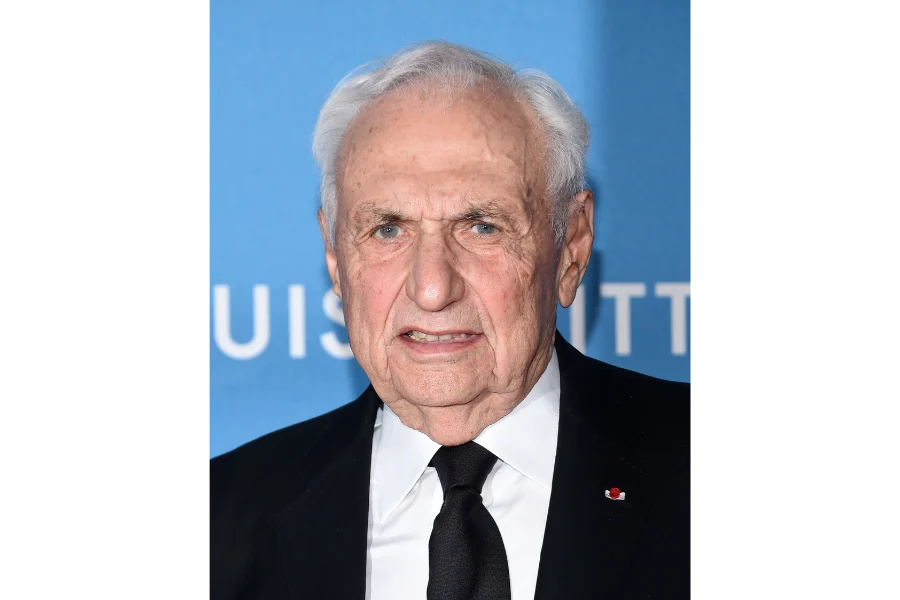
Much of Gehry’s reputation rests on his ability to see architecture not as a static arrangement of walls, but as a living art form capable of movement and expression. His work approached buildings as monumental sculptures, shaping them with curves, folds and sweeping planes that felt almost improvised. This instinct gave rise to a new architectural language, one that resisted predictability and embraced surprise. Even in his earliest experimental projects, Gehry revealed an instinct for pushing boundaries in pursuit of delight.
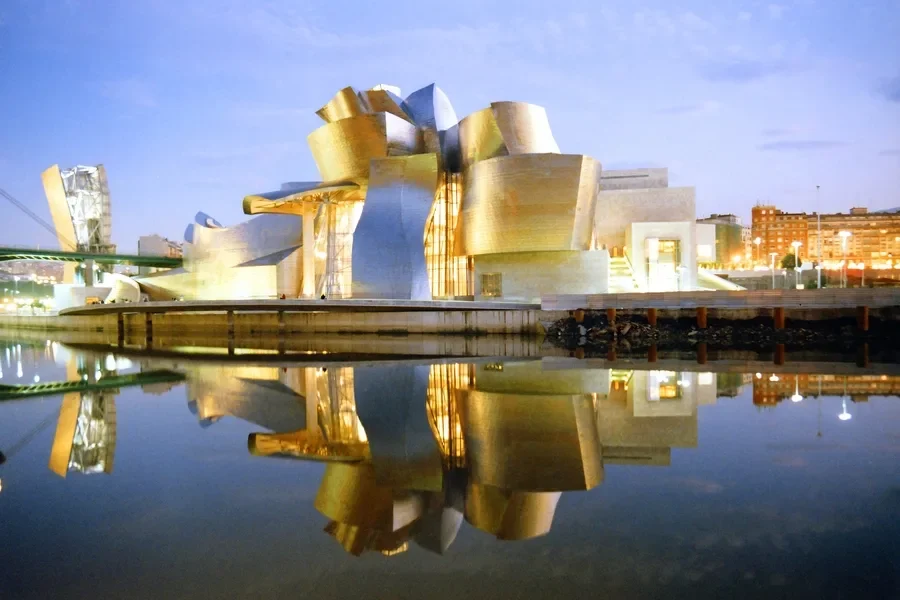
The turning point in global recognition came with the Guggenheim Museum Bilbao. Its titanium surfaces, rippling gently along the Nervión River, offered a sense of motion frozen in metal. The project did more than redefine a museum’s silhouette. It became a cultural phenomenon, inspiring what would later be described as the Bilbao effect, where a bold piece of architecture invigorates an entire region’s identity and economy. For Bilbao, Gehry’s creation became an instant landmark, drawing visitors from around the world and proving that architecture could reshape the fortunes of a city.
In Los Angeles, Walt Disney Concert Hall embodied the same sculptural spirit but translated it into a symphony of stainless steel, reflecting sunlight in soft, shifting tones. The building’s exterior captured international attention, while its interior earned acclaim as one of the finest acoustic environments for orchestral performance. Gehry managed to create a space where music and architecture seemed to converse, elevating each other in a shared expression of artistry. It became a civic icon, symbolizing the creative heart of the city.
Fondation Louis Vuitton in Paris marked another milestone in Gehry’s exploration of form. Set within the Bois de Boulogne, the structure rises like a fleet of glass vessels filled with air and light. The design combines structural ambition with an ethereal softness, embodying a sense of contemporary luxury while remaining firmly rooted in Gehry’s characteristic experimentation. The building is both a cultural destination and a piece of architecture that feels lifted from a dream, demonstrating how far Gehry could stretch the boundaries of material and imagination.
Alongside his major buildings, Gehry’s influence reached into the world of high-end design and craftsmanship. Collaborations with Tiffany and Co., Louis Vuitton and other luxury houses extended his aesthetic into smaller-scale works, allowing collectors to engage with his creative language in more intimate forms. Sculptural bracelets, sinuous vessels and limited-edition objects became expressions of the same design philosophy seen in his buildings. These partnerships reaffirmed his status as a multidisciplinary creator, blurring the lines between architecture, art and luxury.
A defining part of Gehry’s legacy lies in his embrace of advanced technology. Long before digital modeling became common, he championed specialized software to translate freehand sketches into complex structures with remarkable precision. This commitment to innovation changed the architectural landscape, giving future designers the tools to imagine more freely. His willingness to explore technical frontiers reinforced his belief that imagination should be unrestricted by traditional constraints, and it helped bridge the gap between artistic vision and engineering possibility.
Beyond their physical impact, Gehry’s buildings shifted the cultural meaning of architecture. His projects were destinations in themselves, places where visitors paused to reflect, to wander and to marvel. They fostered a deeper engagement with the built environment, turning simple acts like walking into poetic experiences. Gehry gave cities a sense of character and emotional resonance, reminding the world that architecture has the power to inspire wonder in daily life.
His legacy continues through the cities transformed by his work, the generations of architects influenced by his defiant creativity and the countless people who have stood before one of his buildings and felt a sense of uplift. Frank Gehry leaves behind a portfolio that gleams across continents, from Los Angeles to Paris to Bilbao, each project a reminder that boldness and imagination can redefine what is possible. His career stands as a testament to the idea that buildings can speak, that they can move, and that they can carry within them the same poetry found in music and art.
In honoring Gehry’s life, we celebrate a creator who reimagined the relationship between structure and emotion. His work continues to invite people to look more closely, to feel more deeply and to recognize beauty not only in harmony, but in daring. Through his buildings, the world gained a richer visual landscape and a renewed belief in the power of human imagination. Frank Gehry’s legacy endures in steel, glass and light, but also in the countless hearts he inspired.