






















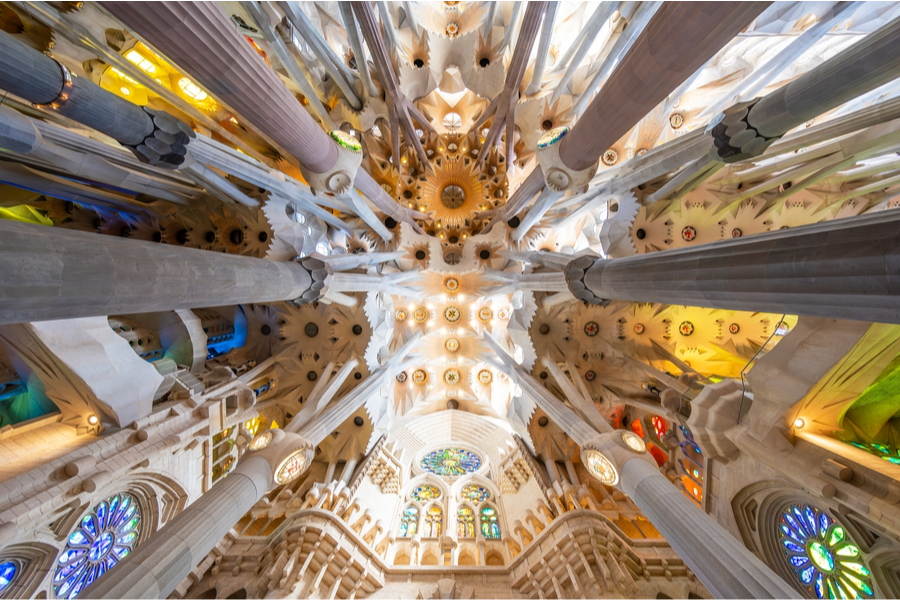
Architecture has long been one of the most visible expressions of Islamic civilization. From the earliest mosques to the great palaces and cities of the medieval Islamic world, builders used form, proportion and ornament to communicate deeper spiritual ideas. Geometry, light and repeating patterns were not simply aesthetic choices. They reflected a belief that the physical world reveals traces of a higher, divine order.
Islamic architecture developed a distinctive visual language rooted in mathematics. Geometric patterns formed from stars, circles and interlocking polygons appear across mosques, madrasas and palaces throughout the Islamic world. These designs could expand infinitely, creating intricate surfaces that suggested the limitless nature of creation. Rather than focusing on figurative representation, builders relied on abstract geometry and calligraphy to convey spiritual meaning.
Spain became one of the most important places where these ideas flourished. For centuries, much of the Iberian Peninsula formed part of Al-Andalus, where Islamic scholars, craftsmen and architects created remarkable monuments that blended science, art and engineering. The Alhambra in Granada, with its astonishing geometric tilework and delicate carved ornament, remains one of the clearest examples of how mathematics and architecture merged in Islamic design.
Even after the political decline of Muslim rule in Spain, many Islamic artistic traditions continued to shape architecture through the Mudéjar style. This architectural language combined Islamic decorative techniques with Christian building forms. Brickwork patterns, ceramic tile surfaces, horseshoe arches and intricate geometric designs became enduring elements of Spanish architecture.
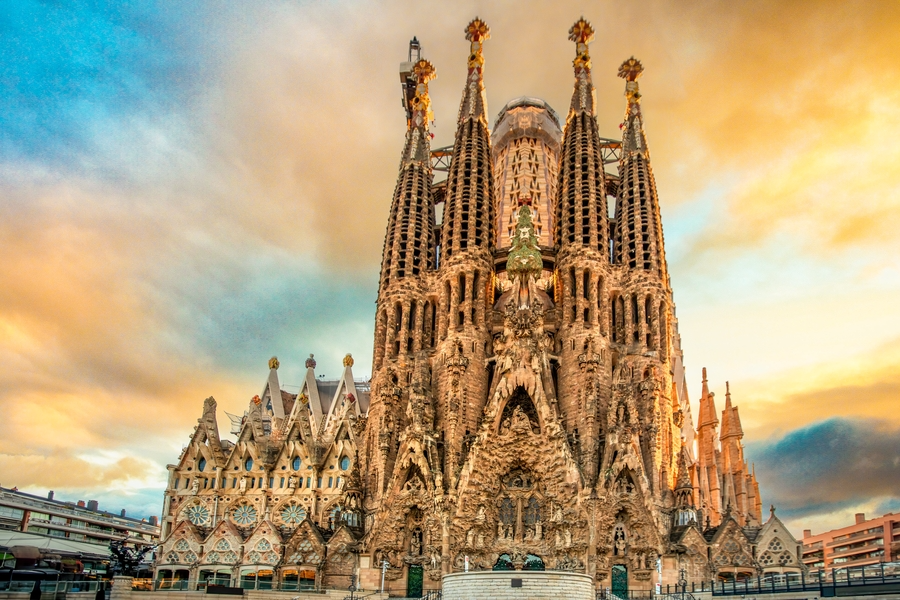
It was within this cultural landscape that Antoni Gaudí came of age in nineteenth century Catalonia. Although his work is often described as radically original, Gaudí was deeply interested in historical traditions and the structural logic behind them. The architectural environment of Spain still carried visible traces of Islamic design, particularly in the use of patterned surfaces, complex geometry and ornamental brickwork.
Gaudí was fascinated by geometry as both a structural and aesthetic tool. Islamic architects had long explored geometry not only as decoration but as a system capable of generating entire architectural compositions. Through simple geometric constructions, craftsmen could create star patterns, tessellations and repeating forms that extended across walls, domes and courtyards. These patterns revealed how mathematics could shape both structure and ornament.
In Gaudí’s work, geometry plays a similarly central role. He experimented with forms derived from nature and mathematics, using ruled surfaces, parabolic arches and complex structural systems to create buildings that seemed both organic and precisely ordered. This search for harmony between structure and form echoes the geometric logic that defined Islamic architectural tradition.
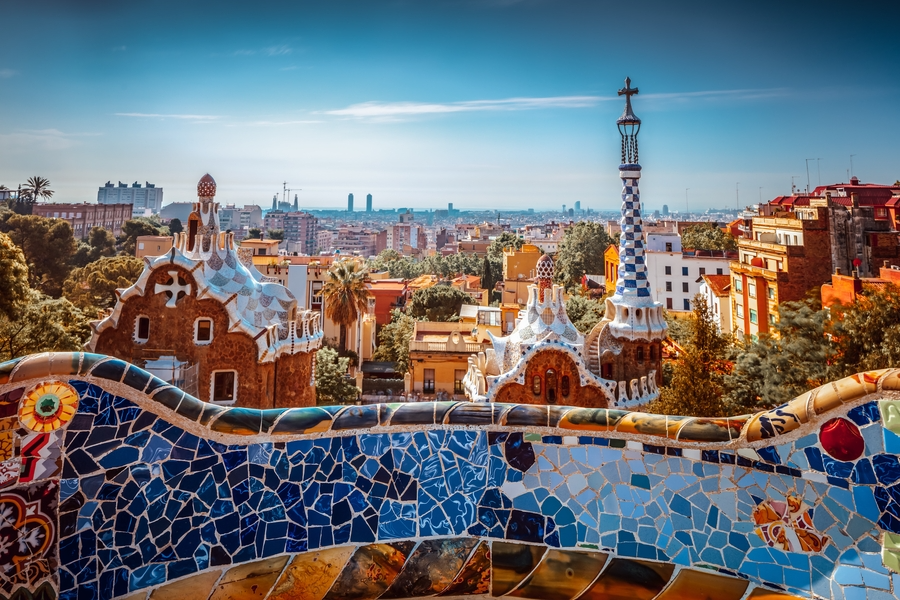
Surface treatment also provides a striking parallel. Islamic architecture often transforms walls into fields of intricate pattern through tilework, carved plaster and patterned brick. These surfaces catch light and shadow in constantly shifting ways, giving buildings a sense of movement and depth. Gaudí employed a comparable approach in his use of colorful ceramic tiles and textured façades, where surfaces shimmer and change under sunlight.
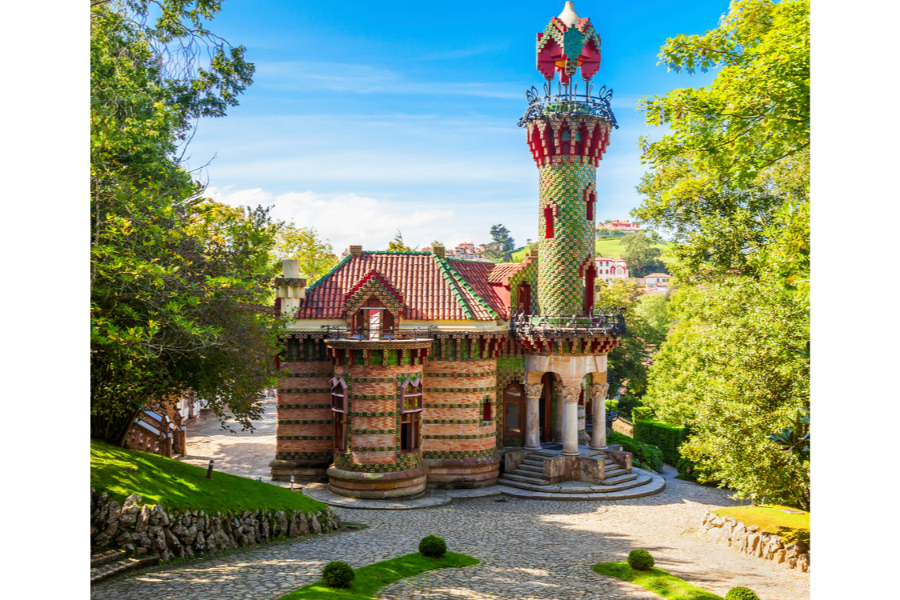
His early work, particularly Casa Vicens, shows clear traces of Spanish Mudéjar influence. The building’s patterned tile surfaces, geometric motifs and ornamental brickwork reflect a Mediterranean tradition shaped partly by centuries of Islamic craftsmanship. Although Gaudí would later develop a more fluid architectural language, these early projects demonstrate how Islamic design traditions formed part of the artistic environment in which he worked.
The deeper connection lies in a shared philosophical outlook. Islamic architecture often reflects the idea that geometry reveals divine harmony within creation. By arranging patterns according to precise mathematical relationships, architects symbolically expressed unity and order. Gaudí held a similar belief that nature itself followed mathematical laws that could guide architectural design.
For Gaudí, structure, ornament and meaning were inseparable. His buildings do not treat decoration as something applied to finished surfaces. Instead, form and pattern emerge from the same underlying geometric principles. His work echoes the logic of Islamic architecture, where pattern grows organically from mathematical systems.
Although separated by centuries, Islamic architects and Gaudí both pursued architecture as a reflection of deeper truths about the universe. Geometry provided a bridge between art, science and spirituality. Through pattern, proportion and structure, architecture became a way to visualize order within the world.