


















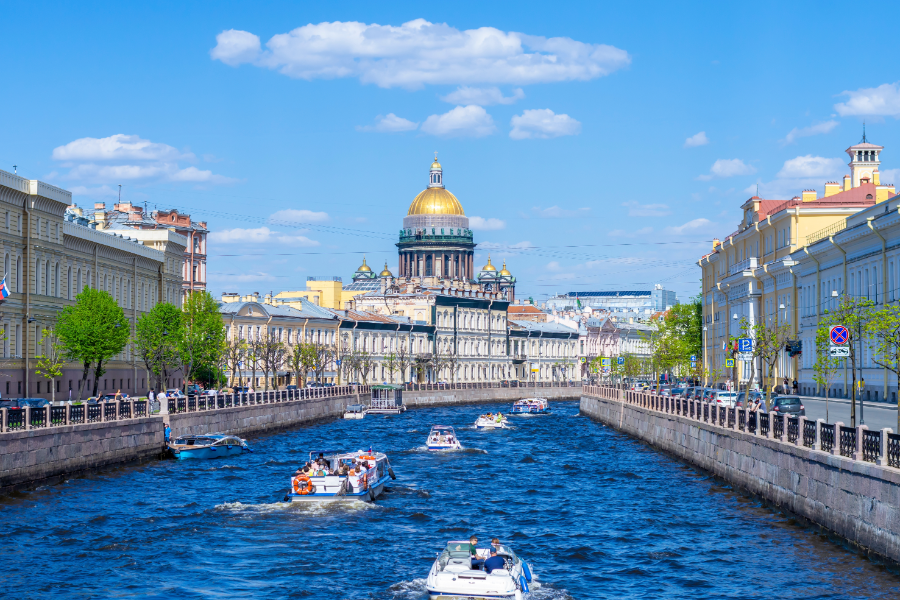
St. Petersburg reveals its imperial character most clearly during the White Nights, when the Neva reflects palace façades, cathedral domes, and granite embankments beneath a sky that never fully settles into darkness. Built on forty-two islands and connected by more than three hundred bridges, the city was designed around water, and that structure still shapes how it is experienced today. Rivers and canals remain the most revealing way to understand its scale, whether from a private boat gliding beneath the bridges or from the embankments as evening stretches long past midnight.
While the museum now holds more than three million objects, the rooms that stay with you are the ones that still feel connected to the lives once lived there. The Malachite Room sits under green stone columns, the Military Gallery lines its walls with portraits of generals who defeated Napoleon, and Nicholas II’s private library offers a quieter view of the last tsar away from public life. Without the crowds, the Jordan Staircase feels closer to how it was originally used, as an entrance built to impress visiting dignitaries rather than
move visitors through a museum.
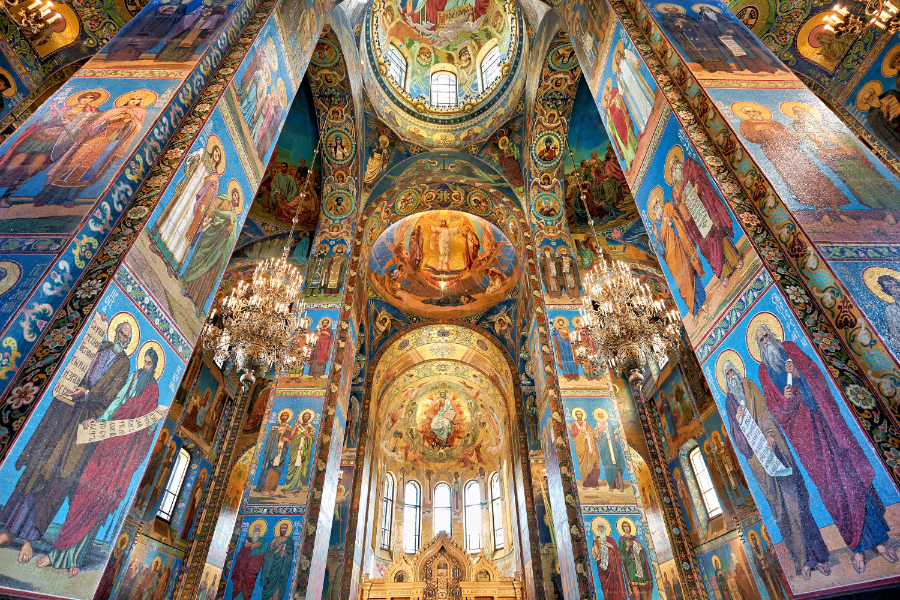
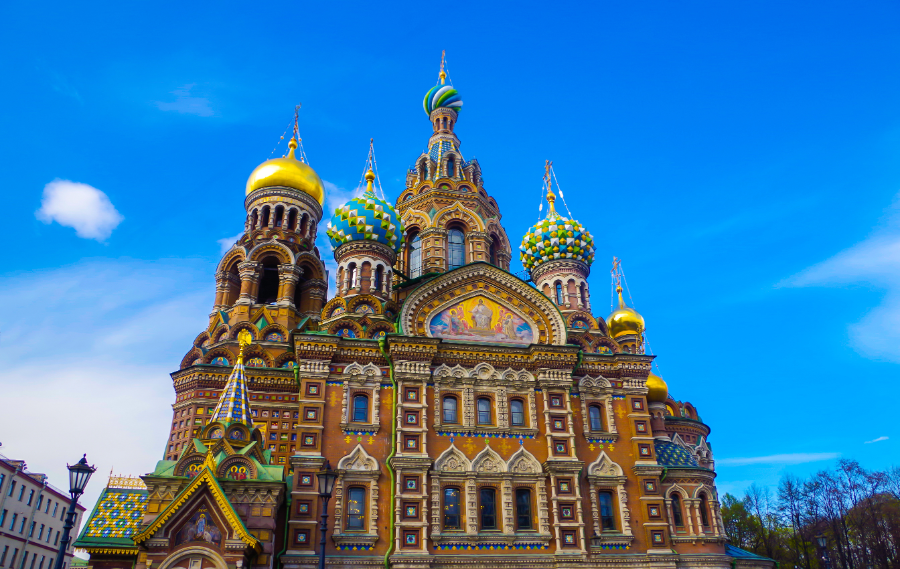
A short walk leads to the Church of the Savior on Spilled Blood, built on the site of Alexander II’s assassination. Its colourful domes dominate the skyline, but the interior leaves an even stronger impression. More than 7,500 square metres of mosaics cover walls, arches, and ceilings, creating an extraordinary richness of detail that changes with the light. Evening is the ideal time to visit, when the colours deepen and the crowds begin to thin.
Nearby, St. Isaac’s Cathedral rises above the skyline beneath a gilded dome visible from across the city. Climbing its colonnade remains a defining St. Petersburg experience, particularly during the White Nights. From this vantage point, the city unfolds in a single, uninterrupted panorama that encompasses the Neva River, the Winter Palace, and the slender spire of the Peter and Paul Cathedral. That spire draws the eye toward Hare Island and the Peter and Paul Fortress, where Peter the Great founded the city in 1703. Today, the historic citadel houses the imperial burial vaults of the Romanov dynasty alongside the Trubetskoy Bastion, the former prison where Russia’s political dissidents were once held.
No visit is complete without leaving the city centre for Peterhof. The hydrofoil from the Hermitage pier is the most elegant approach, crossing the Gulf of Finland and revealing the palace from the same perspective once reserved for foreign ambassadors. Once you arrive, the massive Lower Park comfortably fills an entire day with its elegant formal gardens, tree-lined walkways, pavilions, and the famous fountains of the Grand Cascade stretching all the way to the sea. Peterhof’s greatest achievement is its engineering, with fountains. that operate through gravity-fed water pressure much as Peter the Great intended three centuries ago.
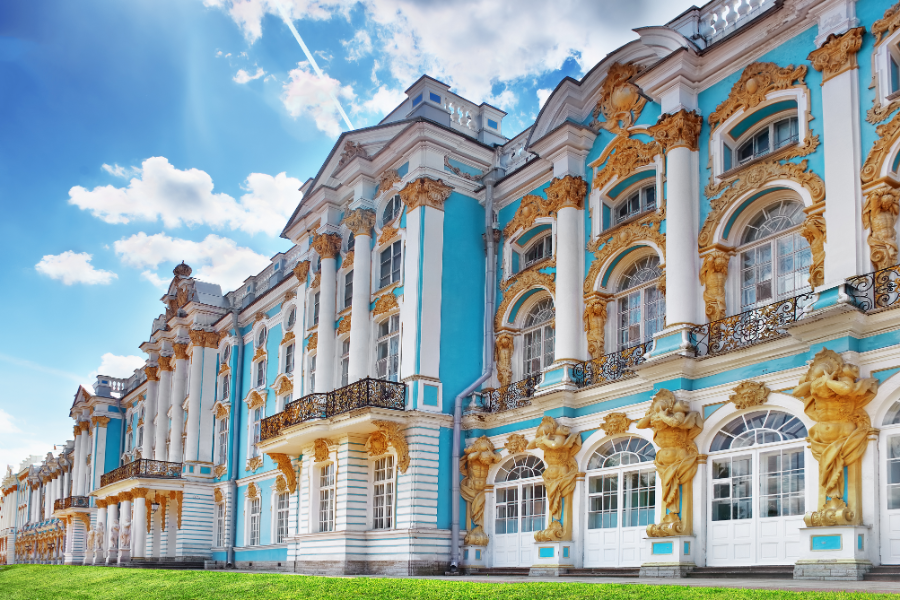
The journey to Pushkin passes through Soviet-era apartment districts before Catherine Palace suddenly appears in blue, white, and gold, its façade stretching for nearly three hundred metres. That contrast only heightens the sense of arrival, which continues through mirrored halls, gilded salons, and ceremonial chambers before culminating in the Amber Room. Famous as much for its disappearance during the Second World War as for its beauty, the room was unveiled again in 2003 after decades of reconstruction. A private car with a knowledgeable guide adds valuable context along the way, linking the palace to the siege of Leningrad and the city’s turbulent twentieth century.
Back in St. Petersburg, the Yusupov Palace offers a more intimate view of aristocratic life. Its private theatre is one of the most beautiful interiors in the city, while its association with Rasputin’s murder continues to attract fascination more than a century later. Nearby, the Fabergé Museum houses the finest collection of Imperial Easter Eggs in the world. Visitors are often surprised by their scale. These are intricate and deeply personal objects whose craftsmanship reveals itself through close inspection rather than grandeur.
An evening at the Mariinsky Theatre provides the perfect conclusion to a day spent among palaces. Opened in 1860, it is one of the great homes of ballet and opera, and arriving early is part of the experience. Chandeliers illuminate the auditorium long before the curtain rises, and the audience itself becomes part of the theatre’s enduring ritual. Behind the scenes, workshops still preserve techniques passed down through generations of costume makers and stage craftsmen.
After midnight, attention turns to the river as boats gather along the Neva to witness the city’s bridges rise in sequence. A private cruise offers the ideal perspective, letting you watch the Palace and Trinity bridges lift against the pale northern sky. From the water, the historic embankments, imperial palaces, and church towers drift past in near silence, revealing St. Petersburg more completely than any vantage point on land.
Travellers with more time should venture beyond the main circuit. Pavlovsk rewards visitors with neoclassical elegance and one of Europe’s finest landscape parks, while Gatchina offers a markedly different atmosphere, defined by lakes, towers, and a palace whose character feels closer to an English country estate than a Russian residence. In nearby Strelna, the restored Konstantinovsky Palace highlights how imperial architecture continues to serve a contemporary purpose, functioning today as the National Congress Palace and a venue for international summits.
St. Petersburg rewards those willing to move beyond a checklist of landmarks. Its palaces, cathedrals, theatres, and waterways form a coherent whole shaped by imperial ambition and centuries of cultural patronage. During the White Nights, when daylight lingers and the city remains active long after midnight, that vision feels particularly vivid. History, architecture, and atmosphere exist here in unusual balance, creating one of the world’s most distinctive and enduring urban experiences.