


















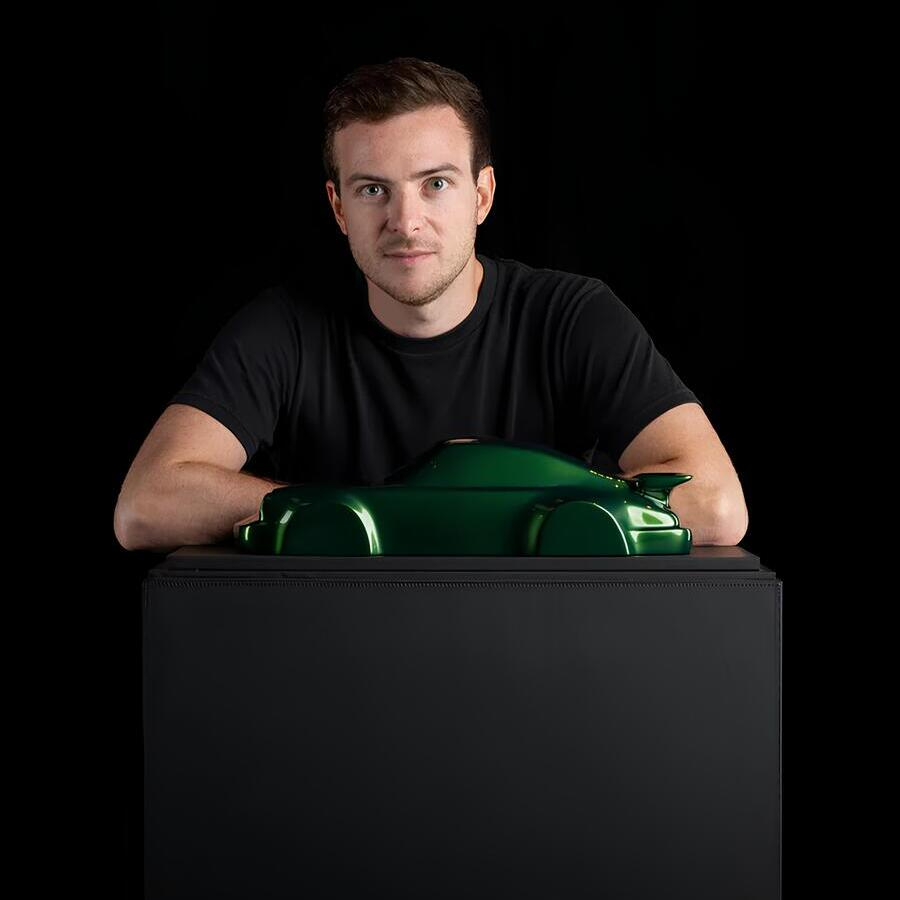
In just over two years, a personal passion has evolved into an international creative house at the intersection of art, design, automotive culture, and luxury. Paul McLine is the artistic name of Paul McLoughlin, a Franco-Irish contemporary artist born in Paris and based in Dubai for more than 20 years. Trained in engineering and architecture, he studies the automobile through its volumes, proportions, and tensions, simplifying them until they become sculpture. His partnership with entrepreneur Édouard Lhuerre began in May 2024, uniting artistic vision and technical understanding with the structure required to build the house.
What began as McLoughlin’s personal creative practice soon gained a workshop, a digital presence, and a carefully considered collector experience. Dubai became the natural first market, bringing together automotive culture, striking architecture, and an appetite for rare objects.
Commissions quickly became more ambitious and personal. The objective was no longer simply to represent a car, but to translate the story of an owner, an iconic automobile, or an object from a collector’s world into sculpture. Works have drawn on cars including the Porsche 964, McLaren Speedtail, Bugatti Chiron, and Ferrari Daytona SP3, alongside projects involving Ferrari Middle East, Bentley Middle East, Land Rover through Al Tayer Motors, and Porsche.
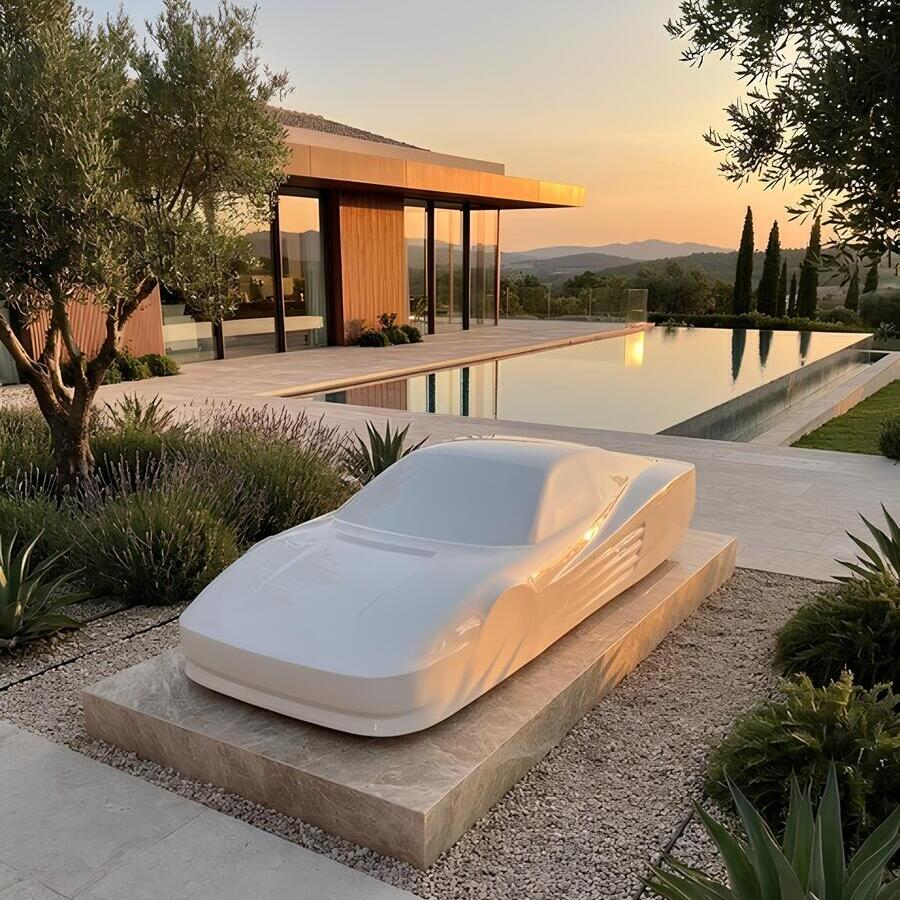
The underlying principle remains consistent: Paul McLine does not reproduce an automobile as a traditional scale model. McLoughlin studies the proportions, volumes, and lines that give a car its identity, then begins a deliberate process of simplification. Wheels, mirrors, grilles, and technical details are intentionally removed until only the strongest and most recognizable lines remain. A Porsche, Ferrari, Bentley, or McLaren is still immediately identifiable, but interpreted through a quieter, smoother, and more essential visual language. Designed without a platform or pedestal, the sculptures interact directly with their surroundings and feel at once automotive and architectural.
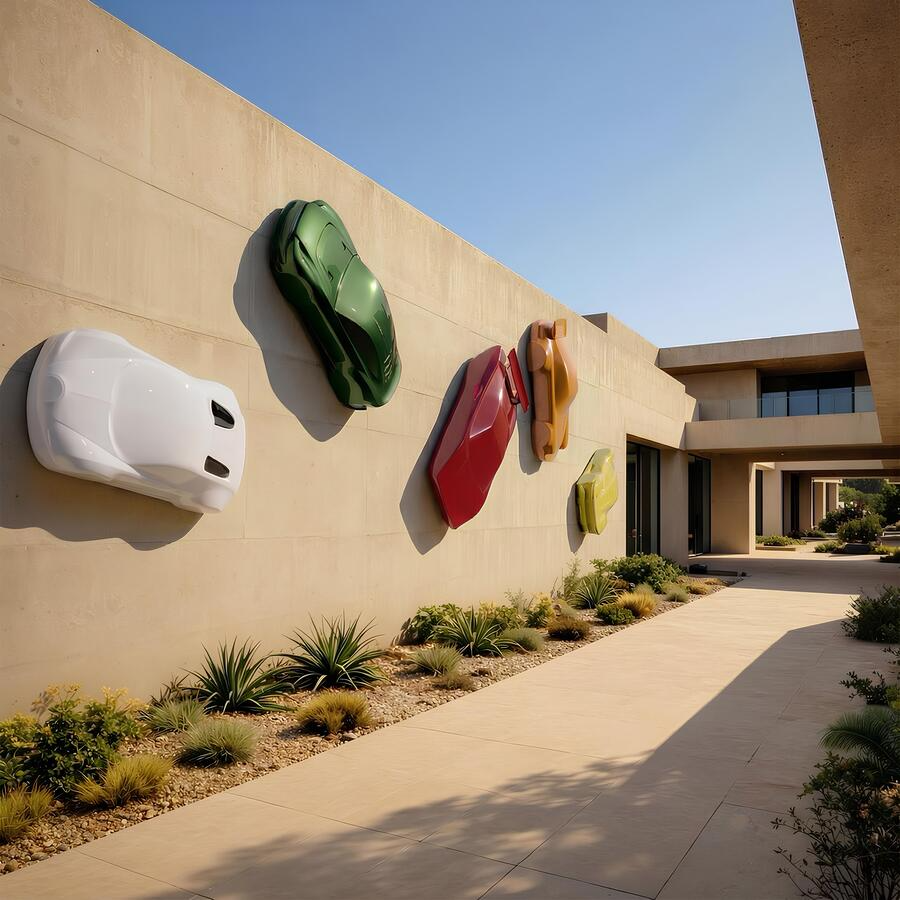
The collection spans several scales. The 1/10 format has become a house signature, offering physical presence while remaining collectible, while the 1/20 format suits smaller spaces and grouped displays. Since September 2025, Paul McLine has also developed a numbered 1/2-scale wall collection. Measuring approximately 2.2 meters depending on the model, these fiberglass works turn automotive bodywork into architectural art. Full-size creations retain the proportions of a real automobile and the artist’s reductive language.
Materials are selected according to scale. The smaller formats use resin suited to the precision and finish required of collectible pieces, while the monumental wall and full-size works use fiberglass for strength and rigidity. Every creation is handcrafted through sculptural work, surface preparation, automotive paint, clear coat, and polishing. Color may reproduce an exact automotive shade, echo a collector’s car, or become an artistic choice. Depending on the format, pieces are numbered and accompanied by a Certificate of Authenticity.
From the outset, the house chose a deliberately selective model built around direct digital sales and collector relationships rather than a widespread retail network. Following its growth in Dubai, Paris became a second anchor point for European clients and partnerships. The house has appeared at Rétromobile, Icons of Porsche, and Chantilly Arts & Élégance, while interest continues to grow in the United States.
Paul McLine’s rapid development has not changed its founding idea: every work should retain the feeling of a personal object. Across compact collectibles and monumental installations, each project begins with a silhouette and a story, treating the automobile not as a product to copy, but as a form to sculpt.