


















TAKE US BACK TO YOUR EARLY YEARS. WHAT FIRST CAPTURED YOUR IMAGINATION, AND WHEN DID ART BECOME MORE THAN A HOBBY?
I was born in a garden in the Naim neighborhood, where the sea lay about 300 meters from our home, clear and blue, bordered by coastline and gardens. Our neighbor was a shipbuilder, and I watched his vessel grow day by day until it was ready for the open sea. These scenes, together with family life and a legacy of ancestors connected to literature, art, and knowledge, shaped my outlook, my sense of giving, and my passion for art.
WHAT ARE THE ESSENTIAL PASSIONS BEHIND YOUR PAINTINGS, INSTALLATIONS, AND PUBLIC EVENTS? ARE THEY ROOTED IN PEOPLE, MEMORY, AND BELONGING?
I am a son of the land, and I belong to it. My father taught us that greenery, agriculture, plants, and flowers are the secret and beauty of life. Our palm-frond roofs, neighborhood, traditional games, simple ideas, and relationships with our neighbors all influenced me profoundly. I draw my colors from that environment, and its people, memories, and sense of belonging continue to appear naturally in my work.
WHY WERE CONVENTIONAL GALLERIES NO LONGER ENOUGH FOR YOU, AND WHAT DOES ART GAIN WHEN IT BECOMES A SHARED, INTERACTIVE EXPERIENCE?
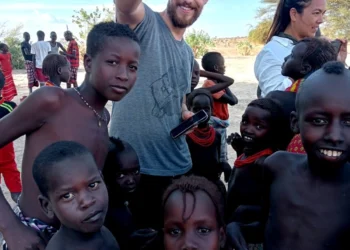
Studying in Cairo placed me amid the Nile, the pyramids, Luxor, Aswan, and a vast world of art and civilization. I returned determined to create a genuine artistic presence. Participation allowed me to move beyond the classroom and gallery, translating my surroundings into paintings, murals, and public experiences. Working with artists, children, and communities affirms art’s cultural and human dimensions. It also helps us instill hope and artistic sensitivity in every child who joins the journey.
HOW DOES AN INSTALLATION BEGIN FOR YOU, AND WHAT HAS THE PROCESS TAUGHT YOU ABOUT SPACE, MATERIAL, AND ARTISTIC DISCOVERY?
The world is vast, and the eye looks toward the farthest horizon. The universe contains space, air, energy, and light, and the artist must translate that environment. The greatest challenge in art is to balance light, air movement and to understand dimensions. When I immerse myself in such space, the planets and galaxies seem to fall beneath my brush and colors. We may feel small, yet this vast world exists within us. That understanding gives my colors freedom and allows the work to surprise me.
WHAT CONTINUALLY DRAWS YOU BACK TO MUHARRAQ? IS IT A SUBJECT YOU PAINT OR A CREATIVE PARTNER IN YOUR WORK?
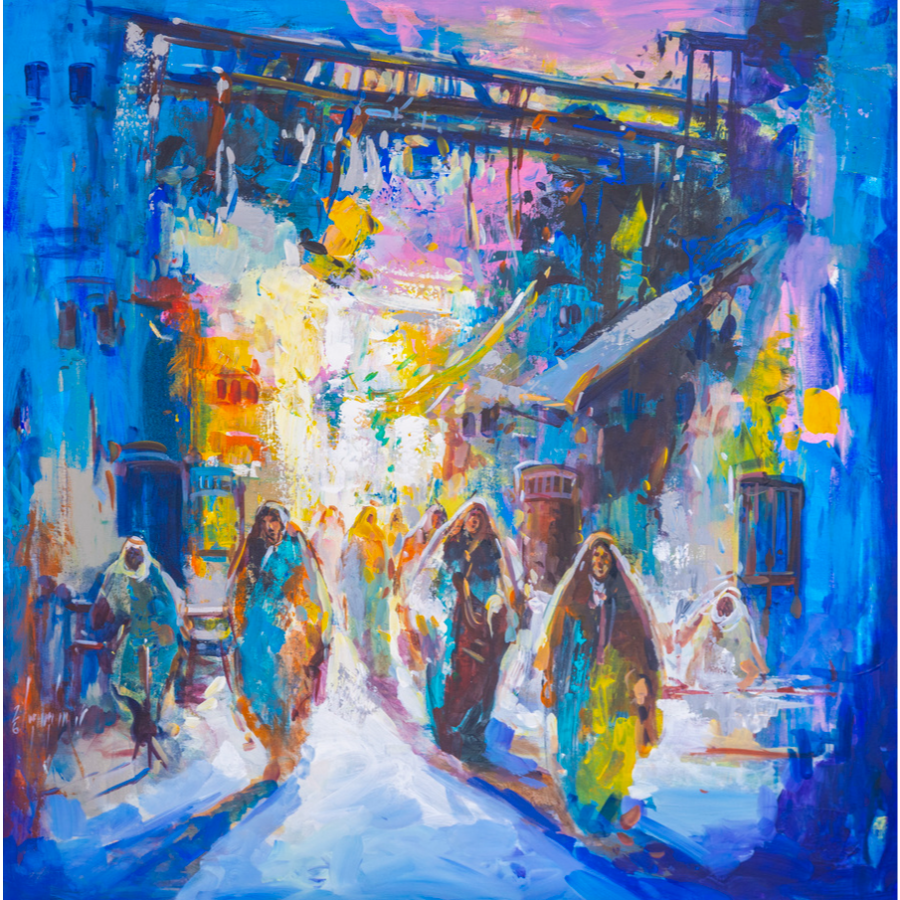
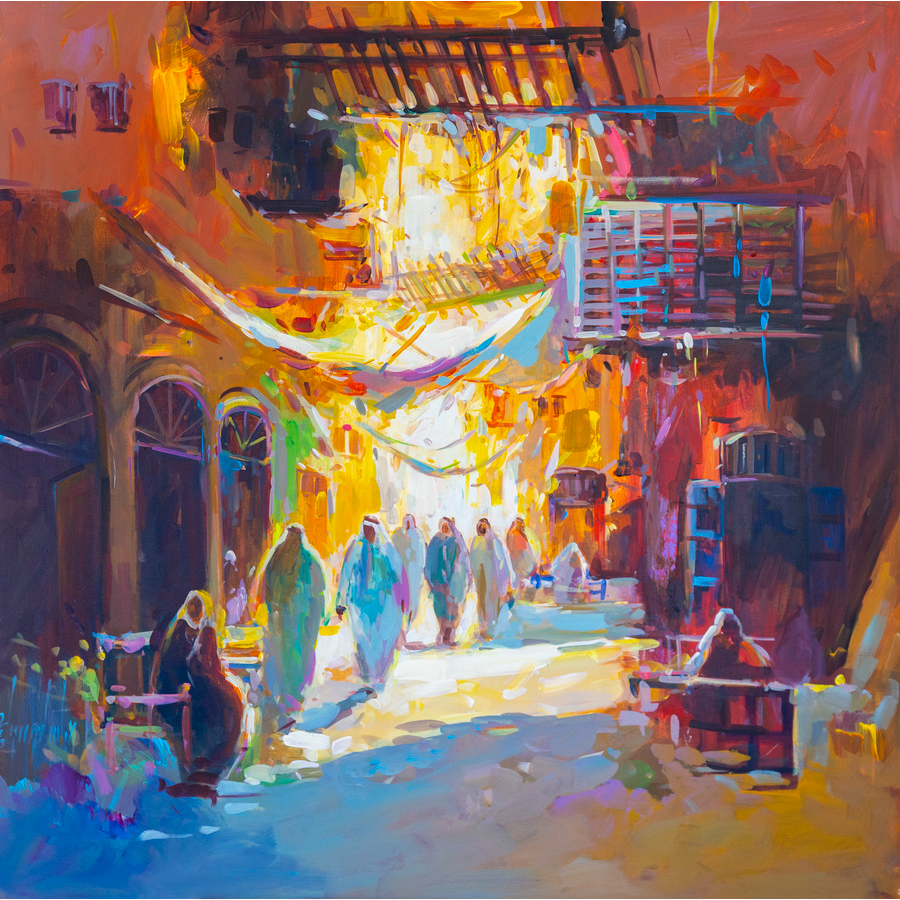
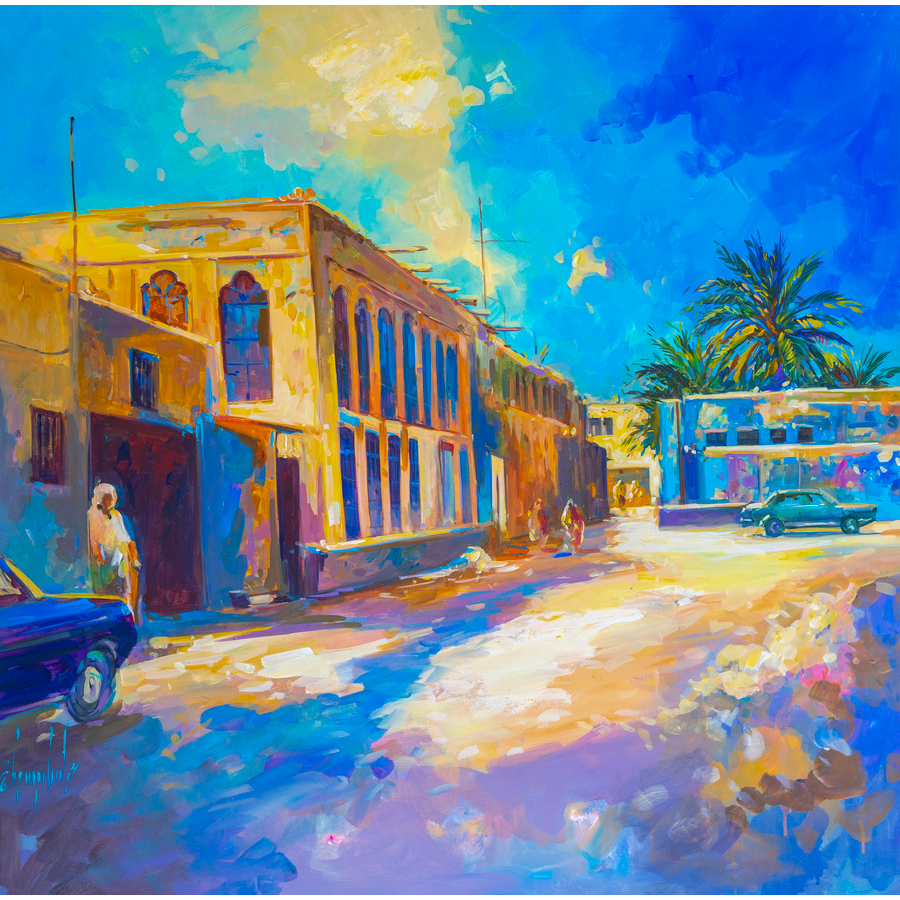
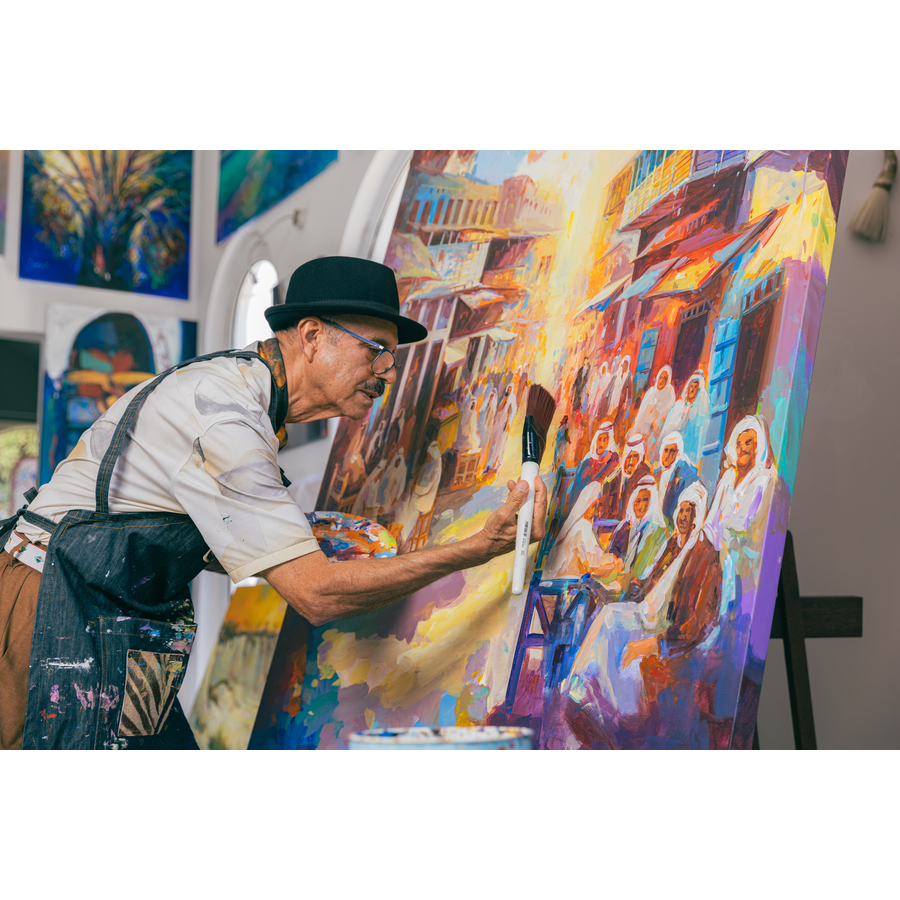
Since childhood, when I would walk across the old bridge to Muharraq, I have been drawn to its houses and alleyways. Preserved by its people and the state, it has become an evolving open museum. I draw from its colors, pathways, markets, clothing, and design traditions. Around Shaikh Isa bin Ali House, one can almost hear the pearl divers’ songs and prayers for a safe return. The city is a gateway to memory, culture, history, and belonging. I’ve also always been drawn towards Manama. It’s a place that’s always evolving, developing, and growing.
WITHOUT REVEALING EVERYTHING, WHAT WILL VISITORS ENCOUNTER IN THE EXHIBITION, AND WHAT UNITES THE WORKS?
I want the exhibition to convey joy and celebration, as though the pearl divers have returned carrying riches and pearls, singing and bringing renewed energy to the house. The voice of the nahham, the traditional singer aboard pearl-diving vessels, remains central to this atmosphere. I hope the paintings will show the daily life of Muharraq and the stories behind people.
PEACE HAS BECOME INSEPARABLE FROM YOUR NAME. HOW DID IT DEVELOP FROM AN IDEA INTO YOUR LIFE’S MISSION?
Peace is the aspiration of every nation. It includes inner peace, human well-being, the future of coming generations, and the environment. When the environment is at peace, people can progress. Our sea must remain rich with its shores and resources, while our land must remain fertile so that we can draw sustenance and dreams from it. Artists give voice to these aspirations through their relationship with nature, place, and the universe.
CAN ART TRULY CREATE PEACE? WHAT CONVINCED YOU THAT AN ARTWORK CAN ACCOMPLISH WHAT OFFICIAL SPEECHES CANNOT?
The Peace Project is a form of soft diplomacy that changes perceptions and encourages openness. Over 35 years, it has connected with institutions concerned with children, health, well-being, and the environment. One event involved a thousand people, while another brought together children and artists representing 192 countries. Art communicates through painting, acting, singing, music, and cinema in a way that is simple, appealing, and purposeful. By reaching emotion and imagination, it can influence people more deeply than an official speech.
HOW DO YOU CARRY BAHRAIN’S GULF CHARACTER, AUTHENTICITY, OPENNESS, AND CULTURAL DIVERSITY WHEN PRESENTING YOUR WORK INTERNATIONALLY?
All my paintings are about nature and Bahrain and the region. They reflect the places my eyes have encountered. Photography helped me record change, while trees, palm groves, the sea, and open spaces continue to inspire me. When an international visitor sees my work, they encounter Bahrain’s beauty, warmth, and simplicity. I portray reality through an inner spirit filled with love, generosity, beauty, and tranquility. Bahrain is not simply my subject; it is the identity and atmosphere carried by the work.
WHAT WOULD YOU TELL A YOUNG BAHRAINI ARTIST ABOUT FINDING AN INDIVIDUAL STYLE, REMAINING ROOTED, AND DEVELOPING THE PATIENCE TO REACH THE WORLD?
Young people are often in a hurry to succeed, but ability requires years of effort. Artists must not be impatient. Use artificial intelligence, but do not allow it to use you or prevent your development. Draw from the best resources, then execute the work in your own way with patience and skill. Nothing can be achieved without education, perseverance, and time. A beautiful work may become part of your legacy and the history of its place.