


















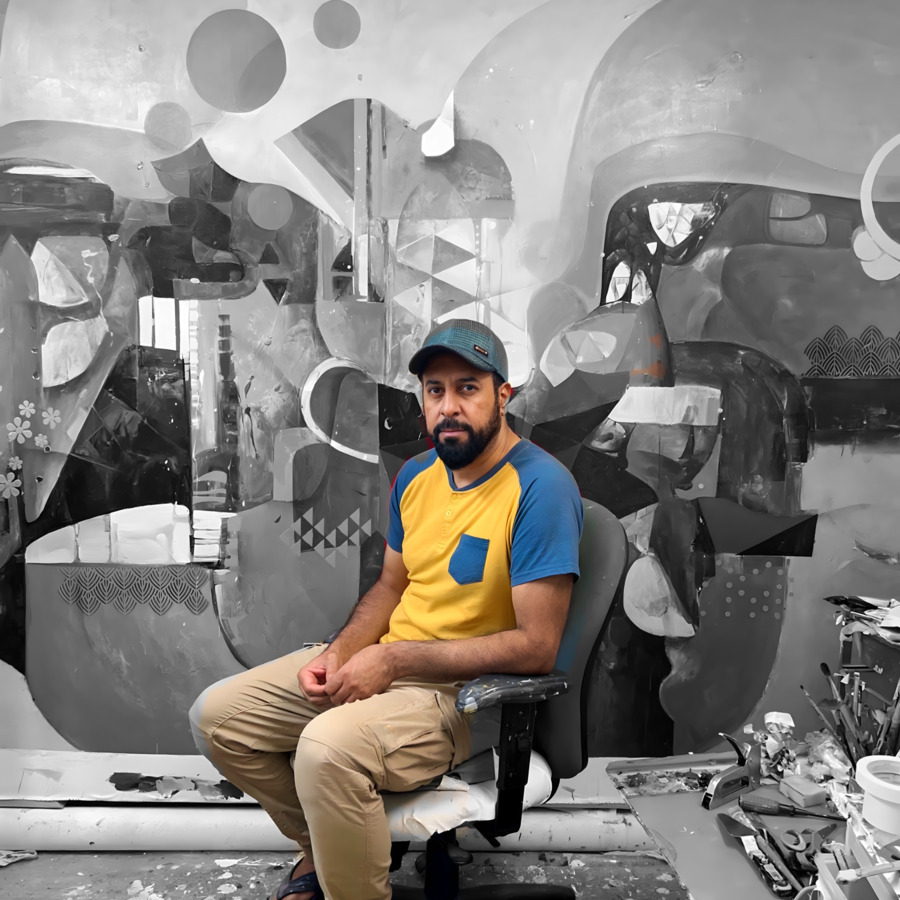
BEFORE THE INSTITUTE, BEFORE ANY FORMAL TRAINING, WHAT WAS THE FIRST IMAGE, OBJECT OR MOMENT THAT MADE YOU UNDERSTAND YOU SAW THE WORLD DIFFERENTLY FROM THE PEOPLE AROUND YOU? WAS THERE A HOUSEHOLD, A NEIGHBORHOOD OR A PARTICULAR BAGHDAD LIGHT THAT TRAINED YOUR EYE BEFORE ANY TEACHER DID?
My beginnings were instinctive, but I was always drawn to particular angles in life, especially as my awareness began to take shape. Colors, sunlight, reflections and shadows were daily influences and sources of questions about the nature of things. People and their movements, the old buildings of Baghdad, its markets and gardens all entered my consciousness and enriched my understanding of a world filled with different scenes and images. They became a store of visual memory that I later relied on when shaping a painting and constructing its composition.
YOU GRADUATED FROM THE BAGHDAD INSTITUTE FOR FINE ARTS IN 1996, IN THE MIDDLE OF THE SANCTIONS ERA, WHEN MATERIALS WERE SCARCE AND THE OUTSIDE ART WORLD FELT VERY FAR AWAY. WHAT DID AN ART EDUCATION ACTUALLY LOOK LIKE IN THOSE CONDITIONS? WHAT DID YOUR TEACHERS INSIST ON, WHAT DID THEY IMPROVISE AND WHAT DID THAT SCARCITY TEACH YOU ABOUT MAKING DO THAT YOU STILL CARRY INTO THE STUDIO TODAY?
My real period of study began at the Institute of Fine Arts in Baghdad in the early 1990s. It was the starting point for any artist seeking knowledge and a sound academic education. Despite the difficult circumstances, most students at the time found ways to adapt and create conditions that allowed them to continue studying and present the best of their talent, artistic ability and determination. The teaching staff worked hard to support the students and help them overcome the challenges so they could continue and succeed. I worked while I was studying, which helped me considerably because it allowed me to obtain the principal materials needed for painting, sculpture and design, even though basic supplies were scarce in the market. I believe persistence and success were my main goals during that period. The experience gave me resilience and an almost limitless ambition to achieve the best possible results in my own artistic practice.
FIVE YEARS SEPARATE YOUR DIPLOMA FROM YOUR BACHELOR OF FINE ARTS AT BAGHDAD UNIVERSITY. MANY ARTISTS WOULD CALL THAT PERIOD THE YEARS IN WHICH THEY TRULY BECAME ARTISTS. WHAT CHANGED IN YOU TECHNICALLY, INTELLECTUALLY AND PERSONALLY BETWEEN THE STUDENT WHO ENTERED THE INSTITUTE AND THE GRADUATE WHO LEFT THE UNIVERSITY IN 2001? WAS THERE A MENTOR, RIVALRY OR FAILURE THAT FORCED THE CHANGE?
Five years of work and perseverance culminated in a distinguished achievement. I graduated among the Institute’s top ten students, which qualified me to enter the College of Fine Arts directly, without a separate application, and to begin in the second year rather than the first. Studying at the Academy of Fine Arts completed the artist’s journey at a broader professional and intellectual level. It gave me a deeper understanding of the theories and techniques of artistic practice, as well as exposure to the experiences of pioneering Iraqi artists and artists from the Arab world and beyond. This strengthened my creative practice, expanded my understanding of other artists’ experiences and allowed me to absorb ideas, philosophies of art, approaches to color and different schools of art. In terms of competition, only a limited number of students possessed both artistic ability and genuine talent, which I consider healthy because it encouraged hard work and the pursuit of creativity at the highest level, with the aim of distinction and individuality.
IRAQ HAS ONE OF THE RICHEST MODERNIST TRADITIONS IN THE ARAB WORLD, FROM JAWAD SALEEM AND SHAKIR HASSAN AL SAID TO DIA AZZAWI AND THE BAGHDAD GROUP FOR MODERN ART’S DEBATE ABOUT HOW TO BE BOTH MODERN AND IRAQI. WHEN YOU WERE YOUNG, DID THAT LEGACY FEEL LIKE A GIFT OR A WEIGHT? HOW MUCH OF YOUR FRAGMENTED FIGURE IS A CONVERSATION WITH THOSE PREDECESSORS, AND HOW MUCH IS A DELIBERATE BREAK FROM THEM?
The art of Iraq’s pioneers is a rich and unique legacy, and I believe there is broad agreement on this within Iraq and across the Arab world. Personally, I find that this artistic wealth, from paintings and sculpture to the murals of Baghdad, creates a fertile atmosphere in which to continue an artistic journey with confidence. The authenticity at the heart of these works provides psychological support and inspiration to the artist. My constant concern was whether I could become part of this legacy, one rooted in Mesopotamian civilization and in the depth of an Iraqi visual tradition that continues to the present day. I wanted to understand and engage with that generation, their experience and their professional standards, while remaining determined to make my own practice distinctive. It had to carry an Iraqi color and spirit, serving as an extension rather than a rupture from the pioneers’ experience and preserving its place within the Iraqi visual arts movement.
LEAVING ONE’S COUNTRY IS RARELY A SINGLE DECISION. IT IS USUALLY A SLOW ACCUMULATION OF SMALLER ONES. CAN YOU TAKE US THROUGH YOURS? WHAT WAS THE LAST THING YOU PAINTED IN IRAQ, AND DID YOU KNOW AT THE TIME THAT IT WAS THE LAST?
Leaving Iraq was not a choice so much as a necessary step, because of my deep attachment to my homeland. Departure had never been part of my plans. The principal reasons for traveling were the conditions of war, the difficult economic situation and the need to continue the creative activities that any ambitious artist requires, opportunities that were no longer available. I have never stopped pursuing my artistic practice since leaving Iraq, despite the frequent travel and movement from one country to another. I cannot recall which paintings were the final ones I made before leaving because there were many, but I always carry some of my works with me. They represent my existence and remain like a living shadow at my side, wherever I may be, until they find a suitable place among the different artistic experiences of each country. I believe continuing to work is the passion that fills me every day.
CAIRO HAS ITS OWN LONG, PROUD AND SOMETIMES CLOSED ART WORLD. WHAT WAS IT LIKE TO ARRIVE AS AN IRAQI PAINTER WITH FULLY FORMED TRAINING AND NO LOCAL HISTORY? WHAT WERE THE FIRST DOORS THAT OPENED, WHICH ONES STAYED SHUT AND AT WHAT POINT DID YOU STOP FEELING LIKE A GUEST IN THE EGYPTIAN SCENE?
Cairo has been a wonderful experience for me. It offers the right environment in which to strengthen a creative practice, with its many galleries and its remarkable community of male and female artists. My first experiences came through Cleg Art Gallery and Motion Art Gallery. They provided an important beginning, allowing me to become acquainted with the art scene, share my work, create cultural and intellectual dialogue, exchange ideas and encounter the varied experiences of artists in Egypt. I never felt like a stranger. Egypt is an ancient country with a rich culture and a connection to an old civilization that runs in parallel with Iraq’s. I therefore found no difficulty in understanding the general artistic sensibility, approaches to presentation or ideas connected to popular heritage and deeply rooted social customs, many of which resemble traditions found across the Arab world. I painted faces drawn from familiar figures, including the peasant woman, the doorman, the musician and the local woman, as well as scenes from the Egyptian countryside, the village mayor, farmers and Umm Kulthum. I also explored wedding traditions, the zar ritual and people’s daily lives, and these works were well received.
YOUR FIGURES ARE FRACTURED ALONG CUBIST LINES, WITH PLANES SLIDING ACROSS ONE ANOTHER AND FEATURES DISPLACED BUT NEVER FULLY LOST. WHEN DID THE FACE FIRST BREAK IN YOUR WORK, AND WAS IT A FORMAL DISCOVERY OR AN EMOTIONAL NECESSITY? DO YOU THINK OF THE FRACTURE AS DAMAGE, ANALYSIS OR A KIND OF HONESTY ABOUT HOW WE ACTUALLY PERCEIVE ONE ANOTHER?
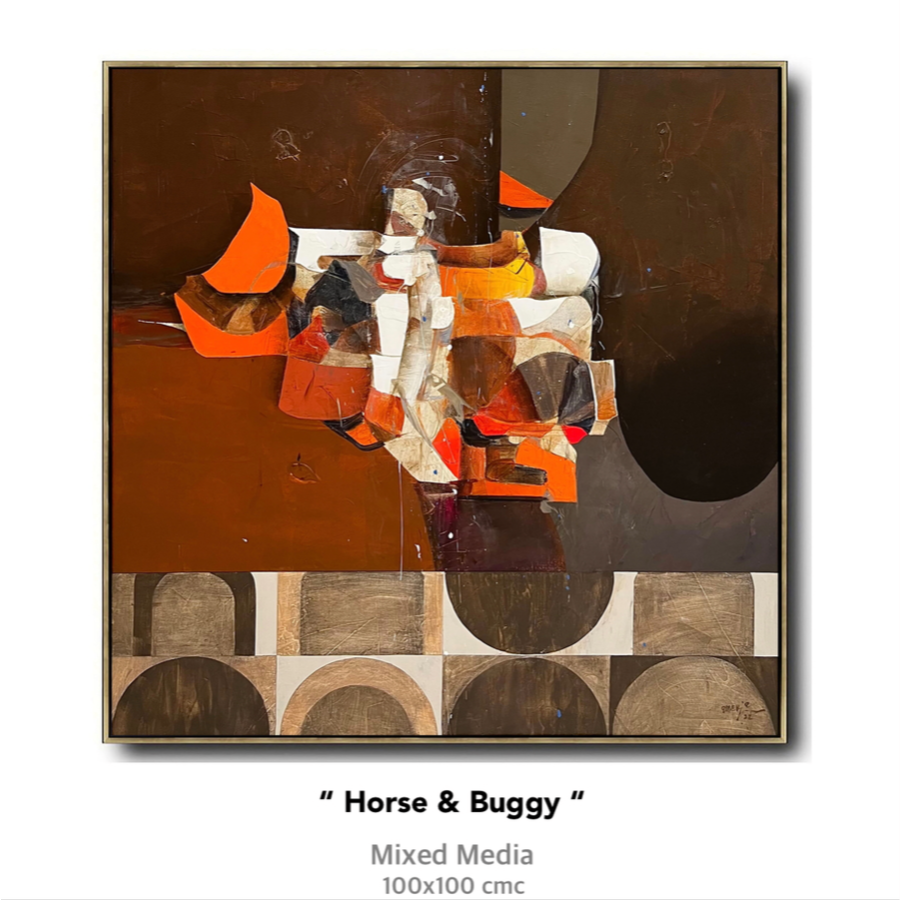
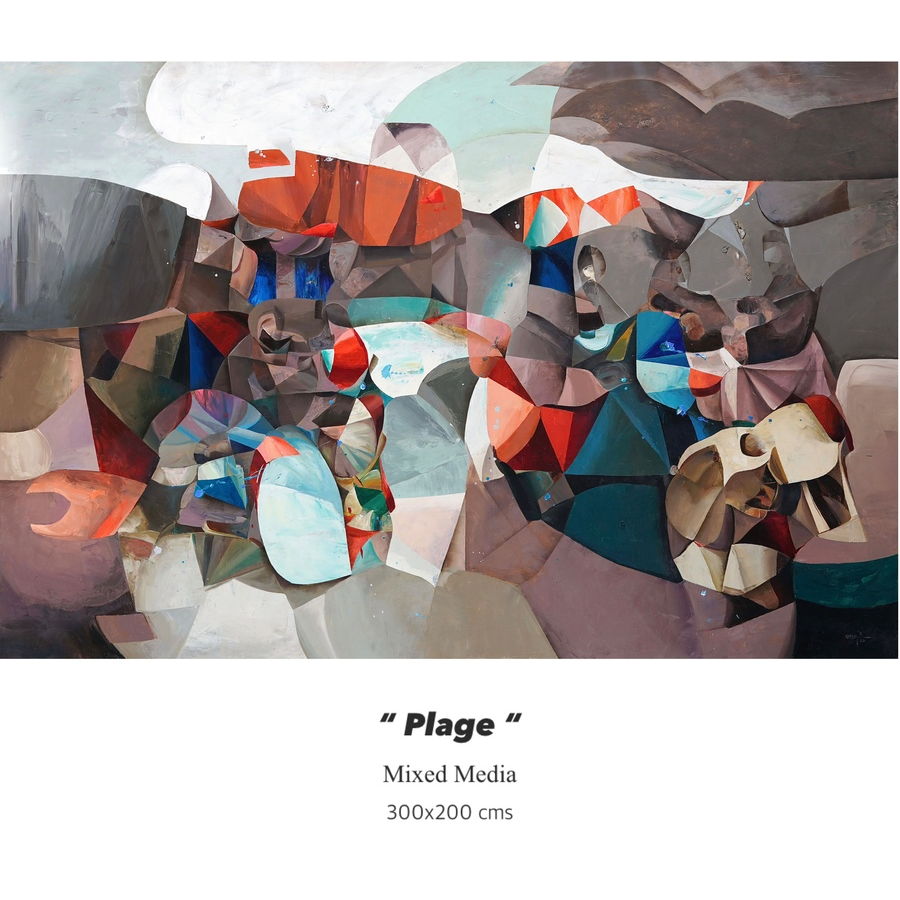
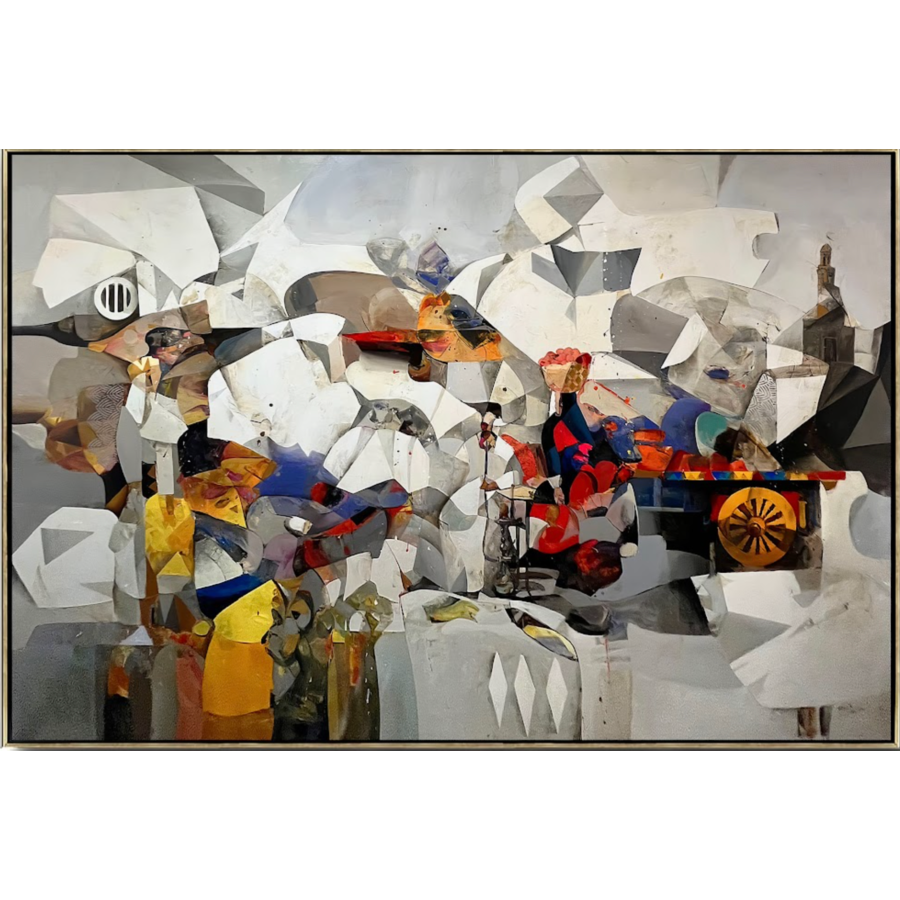
There is a principle in Picasso’s painting based on dismantling a form and reconstructing it in another way. I consider this the foundation of what I do. I break down the form and rebuild it according to a particular philosophical and geometric vision rooted in Cubist Expressionism. In this limitless world, forms emerge, meet and overlap at complex geometric angles. I find myself like a child rearranging scattered objects however he wishes, rebuilding the features of a form according to a new logic that differs from reality and is abstracted and condensed to bring distances closer together. The result is another fragmented world that does not necessarily resemble the one we inhabit today. Yet I feel a need to construct forms anew beyond the limits of reason, creating a different artistic vision through new angles for faces and figures. I want to produce a psychological and emotional shock in the viewer and lead them into another space that may not always appear logical but leaves behind its own kind of impact and enchantment.
YOU MOVE BETWEEN OIL ON CANVAS AND MIXED MEDIA, SOMETIMES WITHIN THE SAME BODY OF WORK. WHAT DOES EACH MATERIAL ALLOW YOU TO SAY THAT THE OTHER CANNOT? WHEN YOU INTRODUCE COLLAGE, TEXTURE OR FOUND SURFACES INTO A FACE, ARE YOU ADDING INFORMATION OR TAKING CONTROL AWAY FROM YOURSELF?
Mixed media allows me to realize my expressive and psychological impulse with greater depth, while also condensing and complicating space at the same time. I need multiple methods of construction and materials that can be shaped deliberately and, at times, through the spontaneity of brush and color. The result differs from the familiar simplicity of a traditional painted surface. I do not use collage in my work, but I distill the spirit of collage and its visual effect within particular areas. I combine several materials to reveal the appropriate effect of masses and spaces, sometimes emphasizing the density of color in selected areas. This mixture connects with my emotional fabric, including the complexity and difficulty of applying different material techniques and revealing the individual character of every color and substance. It creates an engaging dialogue that suits my personality and presents an inner challenge that satisfies me above all. When the painting is finished, I find that its values and contradictions have formed, broken apart and come together within a world of extraordinary beauty.
YOUR WORK LIVES IN CAIRO BUT WAS BORN IN BAGHDAD. DO YOU SEE IRAQ IN YOUR PAINTINGS IN WAYS AN EGYPTIAN VIEWER MIGHT NOT, AND HAS EGYPT ENTERED THE PALETTE, LIGHT AND GESTURES WITHOUT YOUR PERMISSION? IS THERE SUCH A THING, FOR YOU, AS A PAINTING THAT BELONGS TO BOTH PLACES AT ONCE?
Preserving an Iraqi identity is very important to me. I come from a distinct culture, spirit and heritage, yet there are points of connection that harmonize with other cultures. I also believe it is the artist’s duty to carry this artistic identity and to introduce others to the standing and potential of Iraqi art. This is part of the exchange of experience and culture among nations. My success in Egypt became tangible through people’s interest, the acquisition of works and the encouragement to hold annual solo exhibitions. A successful artwork imposes its own presence in any time and place, particularly when it offers a distinctive style and approach. We should also remember the effect of one’s surroundings on an artist. I do not conceal the fact that the places and scenes I encounter every day in Egypt enter my subjects in one way or another, and I make an effort to employ them effectively in service of the work. As a result, several of my paintings contain shared elements and images drawn from the Iraqi memories I carry and the different scenes I witness in Egypt. The river, boats, fishermen and farmers all converge within a single painting that belongs to both countries.
YOU HAVE EXHIBITED REPEATEDLY IN CAIRO, PARTICULARLY IN ZAMALEK. HOW HAS EXHIBITING THERE CHANGED THE WORK ITSELF, INCLUDING ITS SCALE, ITS SERIES AND THE WAY YOU THINK ABOUT A ROOM OF PAINTINGS RATHER THAN A SINGLE CANVAS? HAS THERE BEEN A PARTICULAR EXHIBITION THAT FELT LIKE A TURNING POINT IN HOW EGYPTIAN AUDIENCES UNDERSTOOD YOUR WORK?
My principal exhibitions were held at Cleg Art Gallery and Motion Art Gallery in Zamalek, which is one of Cairo’s main centers for art galleries. Exhibiting there did not alter the identity of the work I presented. On the contrary, I used these varied spaces to show my work in different contexts, which allowed me to become part of the scene quickly and without significant difficulty. Soon after arriving, I began working toward a solo exhibition, followed over the years by several successive shows. A number of galleries welcomed me and expressed interest in presenting my work in different venues. Beyond that, an artist’s ability, professionalism and readiness all help make the path toward the right form of presentation more direct, while building confidence and supporting continued engagement with the artistic community wherever the artist may be.
MUCH HAS BEEN WRITTEN ABOUT DISPLACED ARTISTS AND THE AESTHETICS OF EXILE. DO YOU ACCEPT THAT FRAMING, OR DOES IT FLATTEN YOU? WHEN A VIEWER STANDS IN FRONT OF ONE OF YOUR FRAGMENTED FIGURES, WHAT DO YOU HOPE THEY CARRY AWAY: A STORY ABOUT IRAQ, A STORY ABOUT THEMSELVES OR SOMETHING THAT REFUSES TO BE A STORY AT ALL?
Migration is undoubtedly part of memory. On a personal level, I needed the experience for discovery, adventure, research and observation. Travel gave me a great deal, allowing me to move into wider international spheres and increasing my experience and direct engagement with the world. Its natural result has been reflected in the enrichment of my artistic practice, in the way I present it and in what I share with the viewer through the terrain of the painting: the joy of color, the mystery of faces, overlapping bodies, sources of bright light and muted, sorrowful darkness. All of this is the outcome and essence of the power of abstract expression as it relates to every human experience I have lived through.
LOOKING BACK FROM BAGHDAD IN 1996 TO CAIRO TODAY, WHAT IS THE FACE YOU HAVE NOT YET MANAGED TO PAINT, THE ONE THAT STILL RESISTS YOU? IF A YOUNG IRAQI OR EGYPTIAN ART STUDENT CAME TO YOU TOMORROW WITH A PORTFOLIO AND A SUITCASE, WHAT WOULD YOU TELL THEM ABOUT THE DISTANCE BETWEEN THE SCHOOL WHERE YOU LEARN TO DRAW AND THE COUNTRY WHERE YOU LEARN TO SEE?
Every experience occupies its own period of time. I enter a complex creative process to produce an experience that may be symbolic or abstract and may lack direct representation, while at other times I return to the ground of reality and its details. The face is the immediate expressive center through which different emotions can be understood, whether joy, sorrow, happiness or pain. There are dozens of faces in my imagination whose time has not yet come to be born on the surface of a painting, each carrying an expression different from the last. What drives these faces is an inner sensibility, a state of mind and the surrounding conditions that affect the artist. It is therefore important to sustain the ability to work, achieve and experiment. There will be successes and sometimes failures, but all of them enrich an artist’s experience, whether that person is still a student or has accumulated many years of practice, regardless of place.